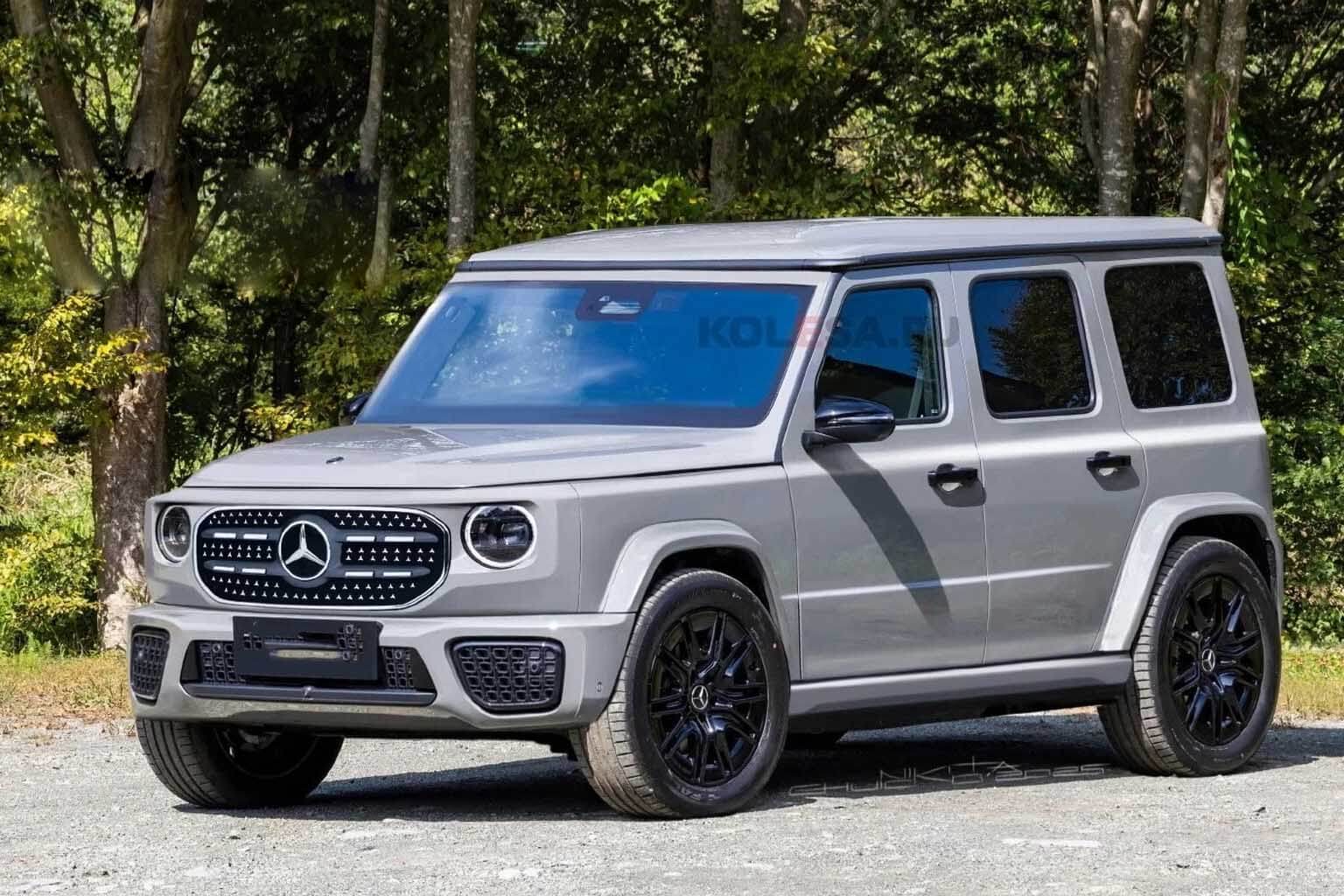
Few vehicles carry as much social weight in Nigeria as the Mercedes-Benz G-Wagon. It is not merely a car; it is a statement, a milestone, a specific signal about where someone has arrived in life. The 2027 G-Class continues one of the longest-running body-on-frame SUV designs in automotive history, yet beneath its boxy silhouette lies genuinely modern engineering. If you are considering one, here is what you actually need to know before spending what is required.
Mercedes-Benz has been quietly modernising the G-Class without disturbing its iconic proportions. For 2027, the significant development is the expanded availability of the EQG, the fully electric G-Wagon — in markets where charging infrastructure supports it. Nigeria is not yet one of those markets in any meaningful way, so the focus for Nigerian buyers remains the G500 and the AMG G63 variants.
The G500 features a turbocharged 4.0-litre V8 producing 416 horsepower. The AMG G63 takes the same engine architecture to 577 horsepower with extensive AMG-specific tuning throughout. Both come with the nine-speed automatic gearbox, three locking differentials, and the low-range transfer case that makes the G-Class genuinely capable off-road — even if most Nigerian G-Wagons never leave tarmac.
This is where directness is necessary. A brand-new 2027 Mercedes-Benz G500 from an authorised dealer in Nigeria will cost in the range of N280 million to N340 million. The AMG G63 pushes well above N400 million in the new configuration. These figures include duties and dealer margins.
Tokunbo G-Wagons from the US and UAE markets are more accessible but still deeply expensive. A clean, low-mileage 2023 or 2024 G500 in the Nigerian used market is priced between N150 million and N220 million depending on specification and condition. Buyers should budget separately for clearing costs, registration, and any necessary refurbishment.
The AMG G63 is the more commonly seen variant in Lagos and Abuja's affluent neighbourhoods, largely because its visual differentiation — wider body kit, quad exhausts, AMG badging is more prominent.
Owning a G-Wagon in Nigeria is expensive in ways that go beyond the purchase price. Fuel consumption is significant — expect 15 to 20 litres per 100km in real Nigerian driving conditions, more in heavy Lagos traffic. Servicing must be done at authorised Mercedes-Benz service centres to maintain warranty and ensure the electronics are properly managed, and those service costs are among the highest of any vehicle in the Nigerian market.
Parts are available through official channels, but the prices are substantial. A single service visit for a G63 at an authorised centre in Lagos can cost between N500,000 and N1.5 million, depending on what is required. Buyers who are not prepared for these ongoing costs have found ownership of a G-Wagon financially stressful in ways they did not anticipate.
For Tokunbo G-Wagons, always conduct a pre-purchase inspection through an authorised Mercedes-Benz service centre or a trusted independent specialist. Key areas to check include the differential locks and low-range transfer case (expensive to repair if faulty), the air suspension if fitted, the condition of the leather and wood trim (originals are expensive to replace), and the complete electronic system health.
The G-Wagon makes sense for buyers who can genuinely absorb both the purchase cost and the ongoing running costs without financial strain, and for whom the prestige and visual statement of the vehicle align with their lifestyle and professional context. For buyers who want an impressive SUV but have a more limited budget, a well-maintained Range Rover Sport or a Lexus LX 600 delivers strong presence at meaningfully lower acquisition and running costs.


 Welcome!
Comments