
Price Check 2026: Toyota Camry 2012–2014 Price in Nigeria
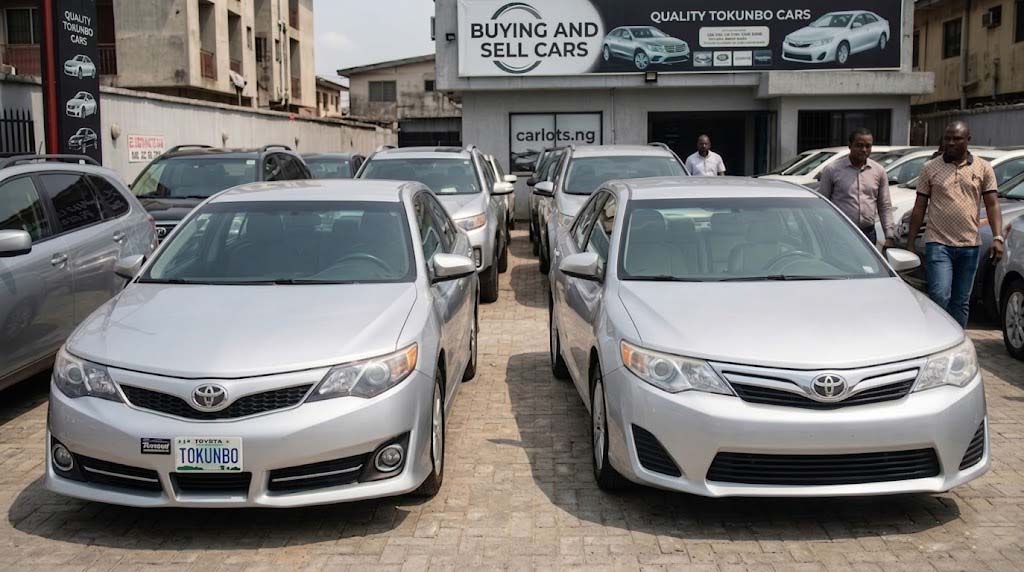
How much is a Toyota Camry 2012–2014 in Nigeria today? Compare Tokunbo vs Nigerian used prices, 2.5L vs V6 fuel economy, and see if it is still worth it in 2026.
If you walk into any major car lot from Berger in Lagos to the busy roads of Abuja, one silhouette remains constant. It is the "Big Daddy" successor, the "Muscle" Camry. Even in 2026, the 2012–2014 Toyota Camry (the XV50 generation) is still the unofficial king of Nigerian roads.
Whether you are a young professional looking for that first "serious" car or a family man who needs something that won't leave him stranded on the Third Mainland Bridge, this car is usually the first name on the list. But let's be real: the economy has shifted. With the way exchange rates and fuel prices have behaved over the last few years, the price you knew in 2022 is ancient history.
In this economy, this car still no dey disappoint! But before you break your piggy bank, you need to know exactly what you are paying for in today’s market.
Tokunbo vs Nigerian Used: The Reality of 2026
Buying a Toyota in Nigeria has always been a choice between "foreign used" (Tokunbo) and "home used" (Nigerian used). In 2026, that gap has widened significantly.
Tokunbo Camry (2012–2014) Foreign used models are still the gold standard. They come with that "new car" smell, intact catalysts, and suspensions that haven't met a single Nigerian pothole. However, due to clearing costs and the high dollar rate, a clean Tokunbo 2012–2014 Camry now sits between 13.5 million and 17.5 million Naira.
Nigerian Used Camry (2012–2014). Because the Tokunbo prices are soaring, more people are holding onto their cars longer. When they do sell, the prices are higher than you’d expect. A well-maintained Nigerian used version of this Toyota model currently ranges from 8.5 million to 11.5 million Naira.
Pro Tip: When buying Nigerian used, always check the transmission. Many owners "manage" a jerking gear until it’s time to sell. Don't let their problem become your 800,000 Naira headache.
2012 vs 2014: Is the Price Gap Justified?
Technically, these cars are brothers. They share the same engine, the same chassis, and almost the same interior. However, the Nigerian market treats them differently.
-
2012 Model: This was the debut year of the "Muscle" body. It is generally the most affordable of the trio.
-
2013 Model: Often cited by mechanics as the "sweet spot." It fixed a few minor interior rattles found in the 2012 version.
-
2014 Model: This is the most expensive because it’s the "youngest" of the pre-facelift years. In 2026, a 2014 model can command a premium of 1.5 million to 2 million Naira over a 2012 model just because of the year on the paper.
Is it worth the extra cash? If the 2012 is clean and has lower mileage than the 2014, go for the 2012. In the world of Toyota, condition always beats the manufacturing year.
2026 Price Comparison Table: Tokunbo vs Nigerian Used
| Year Model | Trim Level | Tokunbo (Foreign Used) | Nigerian Used |
| 2012 | L / LE (Base) | ₦13,500,000 – ₦14,800,000 | ₦8,500,000 – ₦10,000,000 |
| 2012 | SE (Sport) | ₦14,200,000 – ₦15,500,000 | ₦9,200,000 – ₦10,800,000 |
| 2012 | XLE (Luxury) | ₦15,000,000 – ₦16,500,000 | ₦10,500,000 – ₦11,800,000 |
| 2013 | L / LE (Base) | ₦14,000,000 – ₦15,500,000 | ₦9,000,000 – ₦10,500,000 |
| 2013 | SE (Sport) | ₦15,000,000 – ₦16,800,000 | ₦9,800,000 – ₦11,500,000 |
| 2013 | XLE (Luxury) | ₦15,800,000 – ₦17,500,000 | ₦11,000,000 – ₦12,500,000 |
| 2014 | L / LE (Base) | ₦14,800,000 – ₦16,200,000 | ₦10,000,000 – ₦11,800,000 |
| 2014 | SE (Sport) | ₦15,500,000 – ₦17,500,000 | ₦10,800,000 – ₦12,500,000 |
| 2014 | XLE (Luxury) | ₦16,500,000 – ₦18,500,000 | ₦11,500,000 – ₦13,500,000 |
Understanding the Trims: Which One Are You Paying For?
The reason you might see two 2013 Toyota Camry models with a 3 million Naira price difference often comes down to the trim. In Nigeria, we usually see four main variants:
-
L / LE: These are the entry-level models. If you see a Camry with steel wheels (rims) and hubcaps, or a very basic fabric interior without steering wheel buttons, it is likely an L or LE. These are the most fuel-efficient and easiest to maintain.
-
SE (Sport Edition): This is the favourite for younger drivers. It looks more aggressive with a honeycomb grille, integrated rear spoiler, and larger alloy wheels. The suspension is slightly stiffer for better "handling," but you might feel Nigerian potholes a bit more.
-
XLE (Executive Luxury Edition): This is the "big man" trim. It almost always comes with leather seats, wood-grain interior accents, dual-zone climate control, and a sunroof. In the 2026 market, a clean XLE Tokunbo is treated like a premium asset.
-
Hybrid: While less common, the Hybrid versions of these years are surfacing more due to high fuel prices. They cost about 15% more upfront but save you a lot at the pump—provided the battery is still in good health.
Factors That Will Push These Prices Up or Down
Before you head to the car lot, keep these three price-movers in mind:
-
The V6 Premium: If the Toyota you are looking at has a "V6" badge on the back, add at least ₦1.5 million to ₦2.5 million to the prices listed in the table above. The 3.5L engine is rarer and highly sought after by those who prioritise power over fuel economy.
-
Customs Papers: For Tokunbo cars, always verify that the Duty has been fully paid. A "cheap" 11 million Naira Tokunbo 2012 Camry might have "uncompleted" papers, which could lead to the car being impounded by Customs.
-
Colour Preference: In Nigeria, silver, white, and metallic grey Camry units sell faster and often command a small premium. Black cars look great but are sometimes slightly cheaper because of how much heat they absorb in our climate.
Reliability and Resale: Why Nigerians Love It
We love this car because it is essentially a tank dressed in a tuxedo. Nigerians love it because it lasts 10–20 years with proper maintenance. If you treat this car well, your children might even learn how to drive in it.
The resale value is also legendary. You can buy a Toyota Camry today, use it for two years, and sell it for almost the same price (or more, thanks to inflation). It is basically a liquid asset. If you need cash urgently, listing a clean Muscle Camry on a platform like carlots.ng is like putting out a cold bottle of water in the Sahara—it won't last thirty minutes before a buyer calls.
2.5L (4-Cylinder) vs 3.5L V6: The Fuel Factor
In the 2026 landscape, fuel economy is no longer a "good to have"; it is a survival tactic.
The 2.5L 4-Cylinder (The People's Choice). This is the version you see everywhere. It produces about 178 horsepower, which is plenty for city driving and highway cruises. Most importantly, it is kind to your pocket at the filling station.
The 3.5L V6 (The Rocket). If you want to move like a bullet, the V6 is for you. It turns the Camry into a sports sedan. But let's be honest: fuel don cost, but this one still manages, if you have the heart for it. The V6 is thirstier, especially in Lagos traffic, where you spend two hours moving five kilometres. Unless you really crave that speed, the 4-cylinder is the smarter financial move in 2026.
Identifying the Sweet Spot: The 2013 Model
Many experts and long-term owners point to the 2013 model as the "Goldilocks" version. Why?
-
Reliability: By 2013, Toyota had ironed out the first-year glitches of the 2012 redesign.
-
Tech: It usually comes with the Entune infotainment system, which, while dated in 2026, still feels more "modern" than the base 2012 units.
-
Pricing: It sits right in the middle, offering the best value-to-age ratio.
Design Differences: Facelift vs Pre-facelift
While we are focusing on the 2012–2014 range, it is important to note that the Toyota Camry got a massive facelift in 2015.
-
2012–2014: Known for its angular, sharp lines. It looks more "serious" and corporate.
-
2015–2017: Features the "gaping mouth" grille and more curves.
If you see a 2013 model that looks like a 2016, be careful. Many Nigerians "upgrade" their cars with aftermarket fibre kits to make them look newer. While it looks good, check that the "upgrade" isn't hiding a major frontal accident.
Is it Still Worth it in Today’s Market?
This is the million-naira question. With nearly 15 million Naira, you could buy a much newer Korean car or even a small crossover. But should you?
The Case for "Yes" No other car in this price bracket offers the same peace of mind. You can find a mechanic for a Toyota in every village in Nigeria. Parts are available in every market from Ladipo to Panteka. It is a car that understands the Nigerian environment, the heat, the bad fuel, and the rough roads.
The Case for "No" If you are someone who cares about the latest technology, Android Auto, Apple CarPlay, Lane Assist, and 360-degree cameras, the 2012–2014 Camry will feel like a dinosaur. You would have to spend extra money on "upgrades" to bring it into the modern era.
Final Verdict
The 2012–2014 Toyota Camry remains a solid investment in 2026. It is the ultimate "no-nonsense" car. While the prices have climbed significantly, the value it provides in terms of reliability and resale security makes it a winner.
If you can find a clean 2013 model with a 2.5L engine, buy it. Just make sure to do a proper computer scan and a physical inspection before handing over your hard-earned money. In a country where anything can happen, driving a car that you know will start every single morning is a luxury that's worth every kobo.