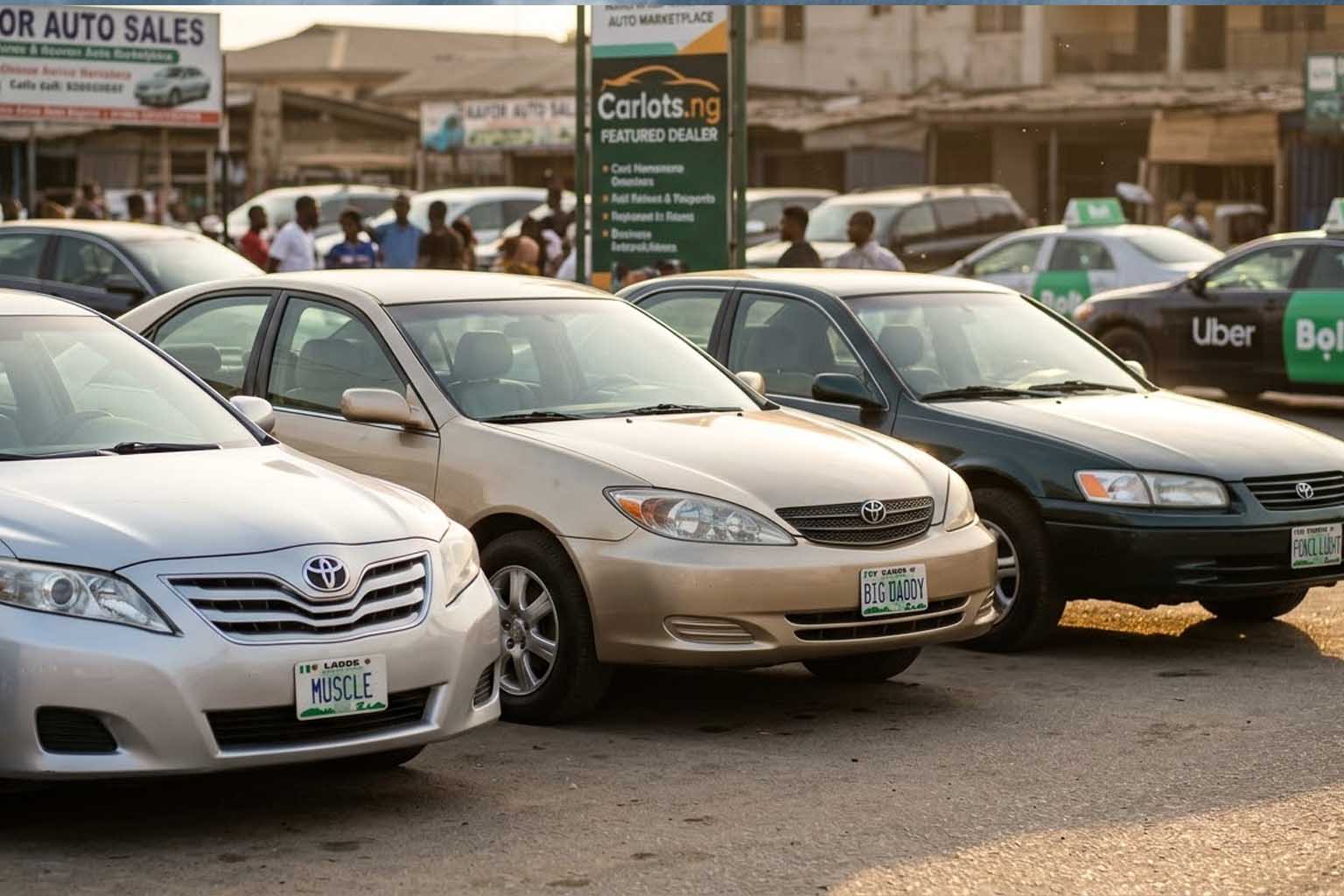
The Toyota Camry is more than just a car in Nigeria; it is a cultural icon. If you have ever spent a few hours in Lagos traffic or driven through the streets of Abuja, you know that the Toyota Camry nameplate carries a level of respect that few other sedans can match. It is the go-to choice for the Nigerian middle class, the reliable workhorse for ride-hailing drivers, and the "starter car" for young professionals.
One of the most unique things about the Nigerian car market is how we name our cars. We don't just call them by their model years; we give them personalities. We have the Pencil Light, the Big Daddy, the Muscle, and the Spider. If you walk into a car lot at Berger or along the Lekki-Epe Expressway and ask for a 2008 model, the dealer might pause, but if you say you want a "Muscle," he knows exactly what you mean.
As we move through 2026, the prices of these vehicles have shifted due to inflation, customs duties, and the ever-fluctuating exchange rate. At Carlots.ng, we are committed to bringing transparency to this market, ensuring you don't overpay for your next ride.
The Pencil Light earned its name from its slim, sleek wrap-around taillights that looked like strokes from a pencil. This model was the ultimate "big boy" car in the late 90s and remains a testament to Toyota’s legendary engineering. While it is getting harder to find a "clean" Tokunbo (foreign-used) version of this model, they are still available for those looking for a rugged, low-maintenance workhorse.
Nigerian Used Price: ₦1,500,000 – ₦2,800,000
Tokunbo Price: ₦3,500,000 – ₦4,500,000 (Rarely available)
The beauty of the Pencil Light is its simplicity. Any experienced mechanic in Nigeria can fix it, and parts are widely available in markets like Ladipo or Apo.
After the Pencil Light came the 2003 model, which Nigerians promptly nicknamed Big Daddy. It was bigger, wider, and felt much more luxurious. Some also call it "Big for Nothing," though that name is often used by people who feel the car’s size doesn't match its fuel consumption compared to the smaller Corolla.
The Big Daddy was a game-changer, introducing a more modern interior and better safety features. Even in 2026, it remains a popular choice for those who want comfort on a budget.
Nigerian Used Price: ₦3,500,000 – ₦5,000,000
Tokunbo Price: ₦6,800,000 – ₦8,500,000
If you are buying a Big Daddy today, pay close attention to the suspension. Because of their age, many Nigerian-used versions have worn-out bushings that can make the ride feel unstable.
If there is one car that defines the Nigerian road, it is the Muscle (XV40). It got its name from its flared wheel arches and "buff" exterior design. This model is arguably the most successful Toyota Camry ever sold in West Africa.
The Muscle is the darling of the ride-hailing industry (Uber and Bolt) because of its balance of prestige and durability. However, it is notorious for the "sticky dashboard" issue, where the material melts under the Nigerian sun.
Nigerian Used Price (2007–2009): ₦4,200,000 – ₦6,500,000
Nigerian Used Price (2010–2011): ₦5,800,000 – ₦8,000,000
Tokunbo Price: ₦8,500,000 – ₦12,500,000
The 2010 and 2011 versions are the "facelift" models with revised taillights and more fuel-efficient 2.5L engines. According to data from Carlots.ng internal tracking and industry leaders like Autochek Nigeria, these models remain among the fastest-selling used cars in the country.
As we move into more modern territory, we meet the Spider (sometimes called Voltron due to its sharp, angular front grille). This model represented a shift toward a more executive feel, with better tech and impressive fuel economy on the 4-cylinder engine.
Nigerian Used Price: ₦6,500,000 – ₦10,000,000
Tokunbo Price: ₦11,000,000 – ₦18,500,000
One thing to watch out for with the Spider is the transmission. Ensure you use the specific Toyota ATF recommended in the manual to avoid "gear jerking," a common complaint noted by users on platforms like Carlots Nigeria.
You might notice that the price ranges above are quite wide. This is because car pricing in Nigeria is determined by three main factors:
Condition (Tokunbo vs. Nigerian Used): A Tokunbo car is imported and hasn't faced Nigerian roads or "mixed" fuel. It typically costs nearly double the price of a locally used version.
Location: Cars are generally cheaper in Lagos because it is the port entry point. By the time a car reaches Abuja or Port Harcourt, transport costs and dealer margins add ₦200,000 to ₦500,000 to the price.
Trim Level: An XLE (Luxury Edition) with leather seats and a sunroof will always command a higher price than a base LE or CE model.
According to maintenance data from CarEdge, a Toyota Camry is one of the most affordable cars to maintain over a 10-year period. However, in Nigeria, you must be proactive:
Oil Consumption: Older Muscle models (2007-2009) are known to burn oil. Check your dipstick weekly.
Dashboard Care: Use a sunshade or a custom carpet cover for the Muscle model to prevent the dashboard from melting.
Genuine Parts: Always source genuine Toyota parts. While "Taiwan" parts are cheaper, they often fail within months, costing you more in the long run.
In an era where "fake listings" and "overpriced stock" are common, Carlots.ng has introduced a manual car approval process to eliminate fraudulent ads. As reported by Punch Newspapers, our platform focuses on resolving opaque pricing and the lack of reliable vehicle history. Every listing undergoes a vetting process where documents and ownership status are checked before going live.
The Toyota Camry remains the gold standard for anyone looking for a reliable, stylish, and easy-to-sell vehicle in Nigeria. Whether you are going for the budget-friendly Big Daddy or the sophisticated Spider, you are making a solid investment. Its resale value is unparalleled; you can use a Camry for two years and often sell it for a significant portion of your purchase price.
At Carlots.ng, we recommend doing a thorough VIN check and having a trusted mechanic inspect any vehicle before payment.


Comments