
The Real Lamborghini Urus Story in Nigeria: From Supercar Dream to Super-SUV Reality
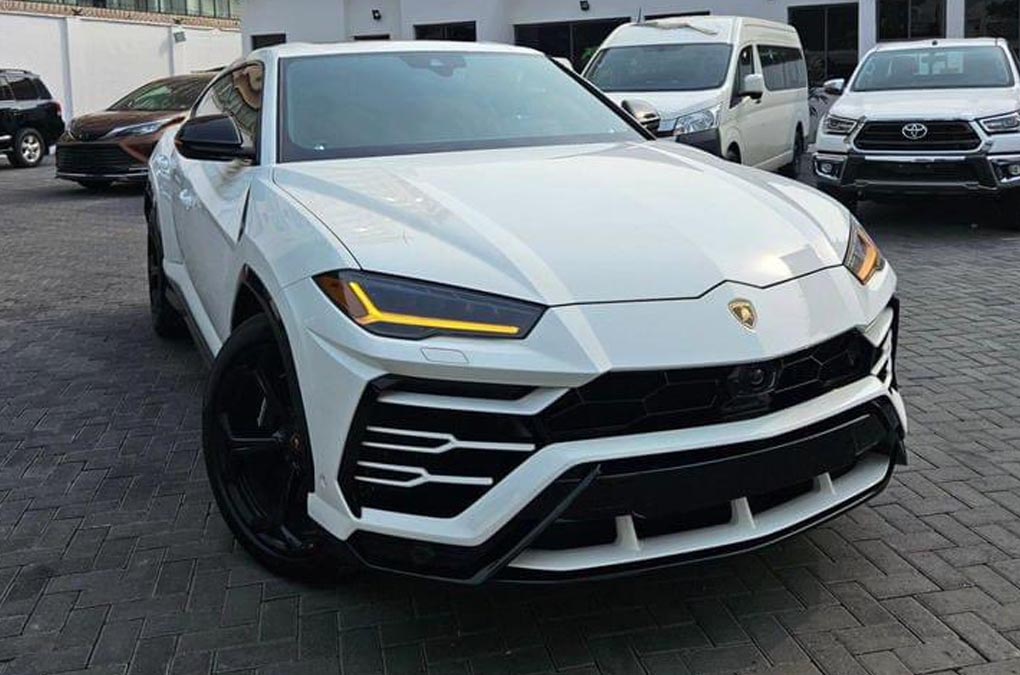
Explore the real story of the Lamborghini Urus in Nigeria. Get current prices, a review of S, Performante, and SE models, and the reasons Nigeria's 'Big Boys' are making the switch.
There’s a sound that has become the definitive soundtrack to Lagos high society, a deep, resonant roar that doesn’t just announce a car’s arrival, but rather, a statement. It is the unmistakable growl of the Lamborghini Urus, the Super Sport Utility Vehicle (SSUV) that has, quite literally, taken over the streets, Instagram feeds, and the entire luxury narrative of Nigeria’s elite.
For years, the Mercedes-Benz G-Wagon was the undisputed king of the ‘Big Boy’ garage. It offered status, rugged capability for our challenging roads, and an undeniable cool factor. But the times, as they say, are changing. The Urus, with its aggressive, jet-fighter styling and the heart of a raging bull, has become the new apex predator. It’s no longer just a trend; it's a full-blown cultural shift.
This isn’t just about buying an expensive car; it’s about claiming a new level of status. In Nigeria, the Urus is more than transportation—it is a mobile, four-wheeled trophy that signifies unparalleled success, breaking the mould, and a direct line to global luxury trends.
Decoding the Price Tag: What an Urus Truly Costs in Naira
When we talk about the Lamborghini Urus in Nigeria, the first question on everyone's mind is always, "How much?" The short answer? It costs a fortune, a figure that shifts constantly with global exchange rates and local import dynamics. The cost is not a fixed price from a showroom, but a fluid sum dictated by the volatile nature of the Naira, customs duties, shipping logistics, and the specific model year.
The Price Reality: New vs. Foreign Used
To put it in perspective, a brand-new Urus S or Performante starts in the range of $240,000 to over $270,000 in international markets. Landing that car on Nigerian soil, clearing it through customs, and adding the logistics premium easily doubles the original factory price, sometimes more.
Based on recent market activity and listings for foreign used (popularly known as Tokunbo) models in Lagos and Abuja, the price brackets are steep:
-
2019-2020 Foreign Used Urus: You can expect figures to hover around ₦380 Million to ₦550 Million (depending on mileage, condition, and specs).
-
2021-2024 Newer or Zero-Mileage Models: These command a significant premium, often starting well above ₦550 Million, with some reaching as high as ₦600 Million or more for highly optioned units.
Key Note on Nigerian Pricing: The listed prices for an Urus are not a static figure. They are a negotiation that factors in the current USD to NGN exchange rate at the point of importation, the comprehensive duties, port charges, and the high-margin required by the luxury auto dealer. Always factor in the 'Nigeria Premium.'
Meet the Models: A Review of the Urus Lineup
The success of the Urus has led Lamborghini to continually refine its Super-SUV lineup, offering variants that cater to different dimensions of performance and luxury.
1. The Urus S: The Refined All-Rounder
The Urus S is the evolution of the original, highly successful base model. It’s the perfect blend of supercar DNA and daily usability.
-
Engine & Power: It features a formidable twin-turbocharged 4.0-litre V8 engine, now tuned to deliver 666 horsepower (CV). This upgrade ensures it retains its title as one of the fastest SUVs on the planet.
-
Driving Experience: In STRADA mode, the Urus S is surprisingly docile and comfortable for navigating Lagos traffic. However, switch to SPORT or CORSA, and the full force of the twin-turbo V8 transforms it into a precision instrument capable of brutal acceleration.
-
For the Nigerian Buyer: This is the practical choice, offering the Lamborghini pedigree and thunderous performance without the extreme track focus of the Performante.
2. The Urus Performante: The Track Specialist
This is the Urus turned up to eleven. The Performante is stripped down, focused, and built to dominate.
-
Engine & Power: Also pushing 666 CV, the power-to-weight ratio is improved by a weight reduction of 47 kg, largely due to extensive use of carbon fibre, including the optional carbon fibre roof, a signature of its performance intent.
-
Unique Features: It replaces the air suspension with a stiffer, lighter steel spring setup, lower ride height, and a new RALLY drive mode for a more engaging, oversteer-friendly experience on loose surfaces.
-
For the Nigerian Buyer: This model is for the purist, the enthusiast who values the absolute limit of performance and the exclusivity of a more aggressive, track-focused aesthetic.
3. The Urus SE: The Hybrid Future (The New King)
Recently unveiled, the Urus SE represents the future of the Super-SUV, introducing a plug-in hybrid (PHEV) powertrain.
-
Engine & Power: It couples the twin-turbo V8 with an electric motor to deliver a combined, staggering output of 800 CV (789 horsepower). This makes it the most powerful Urus ever.
-
Technology & Dynamics: The SE features new technical upgrades, including a torque-vectoring electric differential. It offers an electric-only range, though for the Nigerian owner, the massive boost in power and the cutting-edge status are the main draws.
-
For the Nigerian Buyer: Being the latest and most technologically advanced model, it will quickly become the new status symbol, especially among those who want to show they are current with the absolute pinnacle of automotive engineering.
Why the Big Switch? The Urus vs. The Competition in Nigeria
The shift from iconic luxury SUVs like the Range Rover, Bentley Bentayga, and especially the legendary Mercedes-AMG G63 (G-Wagon) to the Lamborghini Urus is a fascinating study in Nigerian luxury consumer behaviour.
The G-Wagon Fatigue and the Search for Exclusivity
For over a decade, the G-Wagon was the ultimate signifier of wealth in Nigeria. However, as more units hit the road, and with the rise of the Tokunbo market, it reached a critical mass.
The Problem of Ubiquity: The G-Wagon, while formidable, became too common. When every up-and-coming celebrity, politician's aide, and successful entrepreneur has one, the exclusivity factor wanes. The 'Big Boys'—the true high-net-worth individuals—need a new, higher barrier to entry.
The Lamborghini Factor: A Lamborghini badge is in a different stratosphere. Before the Urus, owning a Lambo meant owning a two-door supercar that was utterly impractical for our roads. The Urus changed the equation: it offered supercar status married to SUV practicality. It’s the ultimate loophole.
-
The Power Statement: With a 0-100 km/h time dipping into the low three-second range, the Urus is not just an SUV; it’s an unapologetic supercar that happens to have a high seating position. It accelerates faster than almost any other high-end SUV on the market, offering a literal and metaphorical edge.
-
The Design Language: Its aggressive, stealth-fighter design is polarising but undeniably unique. It attracts more attention than the boxy, military-derived design of the G-Wagon. In a culture where visibility equals success, the Urus wins hands down.
-
The Road Practicality: Our roads, especially during the rainy season, are challenging. While the G-Wagon handles this well, the Urus, with its adaptive air suspension and various ANIMA (driving mode) selectors like TERRA (off-road) and SABBIA (sand), offers a degree of ground clearance and dynamic capability that makes it a viable, high-performance option for Lagos and Abuja streets. The Rolls-Royce Cullinan is comfortable, but the Urus is fast and comfortable.
The Cultural Icon: Urus and the Nigerian Celebrity Class
The true gasoline fuelling the Urus phenomenon in Nigeria is the country’s vibrant and influential celebrity culture. In a society that highly values visible success, the endorsements of Afrobeats stars, BBNaija winners, and top influencers are golden.
When mega-stars like Wizkid, Burna Boy, Patoranking, and socialites like Mercy Eke roll out a new Lamborghini Urus, it sends a powerful message across the continent. It’s not just a purchase; it’s a ceremonial unveiling that solidifies their position at the top of the cultural pyramid. The cars are often custom-painted in bright, bespoke colours—think blinding orange, electric yellow, or stark pearl white—to ensure maximum impact on social media.
The celebrity endorsement does two things:
-
Aspiration is set: It moves the aspirational goalpost for every successful person and aspiring youth. Owning a Range Rover or a basic high-end SUV suddenly feels like a step down.
-
Gender Barrier Broken: The acquisition of the Urus by influential women has also made it a symbol of female empowerment and independence, proving that high-octane luxury knows no gender in the new Nigerian economy.
This connection to Afrobeats and the glitz of the entertainment world has cemented the Urus’s image as the definitive ride of the new money, the disruptors, and those who have achieved financial freedom on their own, often unconventional terms.
Maintenance and Service: The Reality Behind the Thrill
Owning a car that can cost upwards of half a billion Naira comes with a corresponding maintenance reality. A Lamborghini Urus is a highly complex machine that requires specialised care.
-
Specialised Servicing: You cannot take an Urus to a general mechanic. It requires specific diagnostic tools, highly trained technicians, and original parts sourced directly from authorised dealers or international suppliers.
-
Cost of Parts: A simple fender or a carbon-ceramic brake disc replacement can run into the tens of millions of Naira. The financial burden of routine maintenance alone often surpasses the price of a mid-range sedan.
-
The High-Octane Requirement: The high-performance V8 engine demands premium fuel, a necessity for its optimal function and longevity.
Conclusion: The Urus is a Culture, Not Just a Car
The Lamborghini Urus is more than just a super-SUV; it is a meticulously designed artefact of contemporary Nigerian aspiration. It perfectly captures the zeitgeist of a rapidly wealthy nation where success is loud, bold, and demands attention. It bridges the gap between the impractical thrill of a traditional supercar and the necessity of an SUV for local conditions, creating the ultimate status symbol. For the ‘Big Boy’ looking to announce his arrival on a truly global scale, the Urus is, for now, the only vehicle that can truly deliver that roar of distinction.