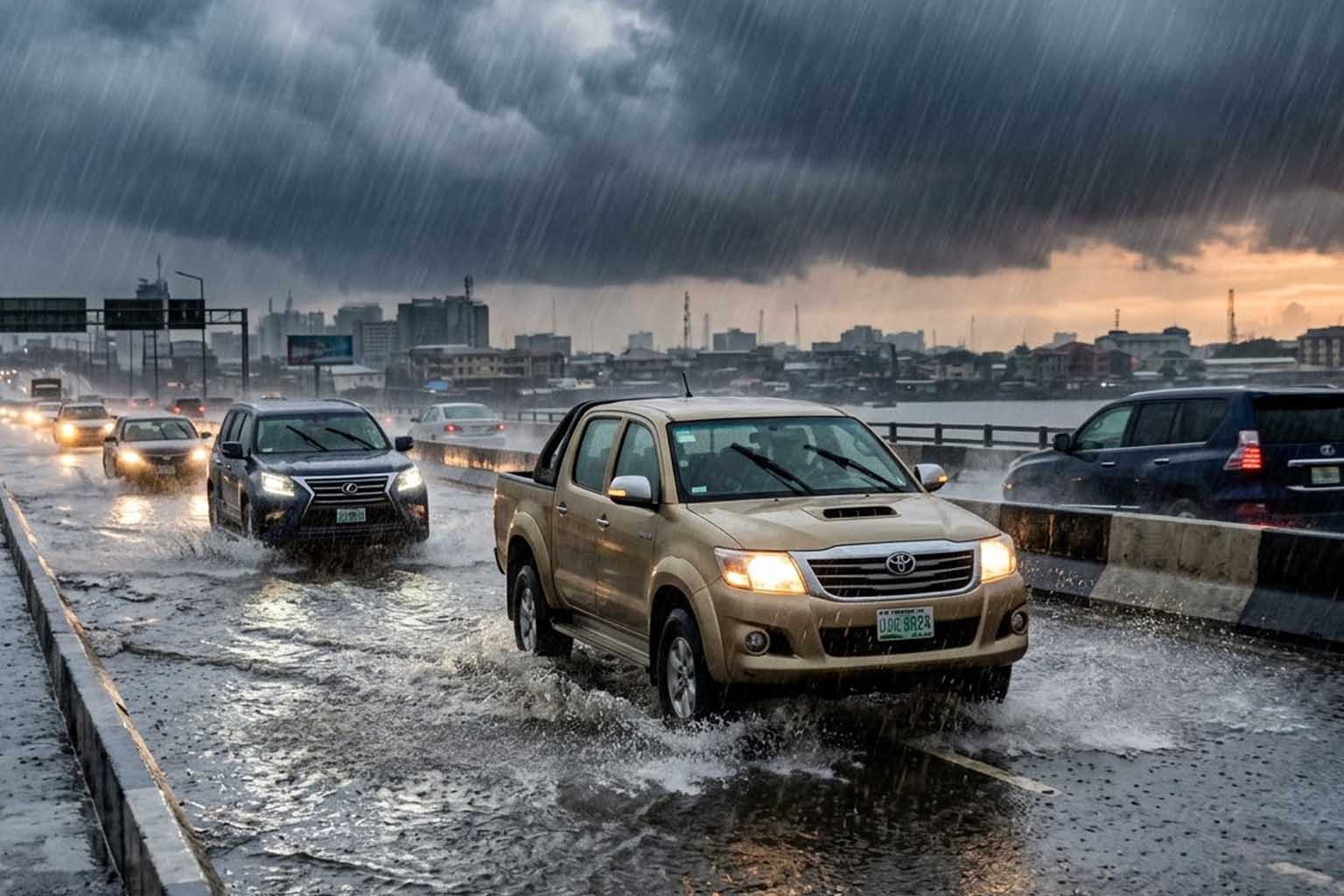
The smell of damp earth and the sudden darkening of the sky over the Third Mainland Bridge are sights every Lagosian knows too well. But this year, the rainy season isn't just "coming", it is arriving early and staying late. The Lagos State Government recently sounded the alarm, with the Commissioner for Environment and Water Resources, Tokunbo Wahab, revealing that the 2026 rainfall will kick off as early as the last week of March.
According to the official Seasonal Climate Prediction released during a press briefing at Alausa, Ikeja, we are looking at an average annual rainfall ranging between 1650mm and 3030mm. For context, that is a massive volume of water that could turn your favourite "shortcut" into a deep canal in minutes.
If you have ever been stuck in a flash flood with your engine sputtering, you know that "God forbid" is not a maintenance plan. As we brace for a season that could last until December, here is everything you need to know about keeping your vehicle afloat and which cars are actually built to survive the Lagos "waterfront" roads.
Before we dive into the mechanics, let's look at the numbers. Commissioner Tokunbo Wahab emphasised that 2026 is influenced by a weak La Niña and a neutral phase of the El Niño Southern Oscillation (ENSO). This means the rains won't just be heavy; they will be persistent, with an early onset and a delayed end.
The government has warned that areas like Agiliti, Itowolo, Ajegunle, and low-lying parts of the Island are at high risk. When an average of 1,965mm of water falls on a city with a complex drainage system, flash floods become an inevitable reality for motorists. Your daily commute is about to become a tactical operation.
Protecting your car in Lagos during the rainy season requires a mix of preventive maintenance and common sense. Here is how to ensure your vehicle doesn't end up at a mechanic’s workshop for a "flood-damaged engine" overhaul.
The rubber seals around your doors, windows, and sunroof are your first line of defence. Over time, the Nigerian sun can crack these seals, making them brittle. When the heavy 2026 rains hit, water will find its way into your cabin, leading to that damp, musty smell that is nearly impossible to remove. Apply a silicone-based protectant to your seals now to keep them supple and watertight.
In a Lagos downpour, visibility drops to near zero in seconds. If your wiper blades are leaving streaks or making a "krrr" sound, replace them immediately. Also, ensure your hazard lights and headlamps are at 100% brightness. You need to see the road, but more importantly, the "Danfo" driver behind you needs to see you.
Lagos is a coastal city, and floodwater is often mixed with salt and sewage, both of which are highly corrosive. Consider getting an anti-rust undercoating. This creates a barrier between your car's chassis and the acidic floodwater, preventing the "eaten-away" look common in older Lagos cars.
If you encounter a flooded road and the water level is above the centre of your wheels, turn back. Most modern cars have their air intake located low in the engine bay. If your engine sucks in water, you will experience "hydro-lock," which essentially turns your engine into a very expensive paperweight.
If you are currently in the market for a vehicle or looking to swap your low-profile sedan for something more "Lagos-proof," ground clearance and wading depth should be your top priorities. Here are the champions of the rainy season.
There is a reason why almost every corporate convoy and government agency uses the Hilux. With a wading depth of about 700mm and high ground clearance, the Hilux is designed to handle the unpredictable nature of Nigerian roads. Its 4WD system ensures that even if the road underneath the water is muddy or slippery, you have enough traction to pull through.
For those who want to navigate the floods of Victoria Island or Ikoyi in comfort, the Lexus GX 460 (often called the "Baby Prado") is a top choice. It features a robust body-on-frame construction and a sophisticated 4WD system. It sits high enough to keep its vital components dry during most flash floods while providing the interior refinement you expect from a luxury brand.
If you are looking for something more urban-friendly, a compact SUV is the way to go. While they can't wade as deep as a Land Cruiser, their elevated height compared to a Corolla or a Camry gives you a significant advantage when navigating those annoying "puddles" that are secretly deep potholes.
If you live in an area prone to severe flooding, the newer Land Rover Defender boasts a staggering wading depth of up to 900mm. It even has a "Wade Mode" that automatically configures the vehicle’s systems for deep water. While it is a premium investment, it is arguably the most capable vehicle for the 2026 climate outlook.
Sometimes, despite your best efforts, you get caught. If the water starts rising around you:
Turn off the AC: The AC fan can actually act like a propeller, splashing water into the engine's air intake.
Keep a steady foot: If you must drive through shallow water, keep a constant, low speed. This creates a "bow wave" in front of the car, which actually lowers the water level around the engine bay.
Never restart a stalled car: If your car dies in the middle of a flood, do not try to restart it. Doing so will force water into the cylinders. Get it pushed to dry land and call a professional.
The Ministry of Environment's 2026 rainfall prediction is a call to action for every car owner in Lagos. Between the late-March onset and the December end-date, our vehicles are going to be put to the ultimate test. By taking proactive steps, checking your seals, protecting your underbody, and knowing when to stay off the road, you can save yourself millions in repair costs.
Whether you are cruising in a rugged Toyota Hilux or carefully navigating a sedan, the key to surviving the Lagos rainy season is preparation. Don't wait until the first heavy downpour hits Alausa or Lekki to start thinking about your car's health.


Comments