
6 Cars Nigeria Police Will Never Stop You In | 2026 Guide
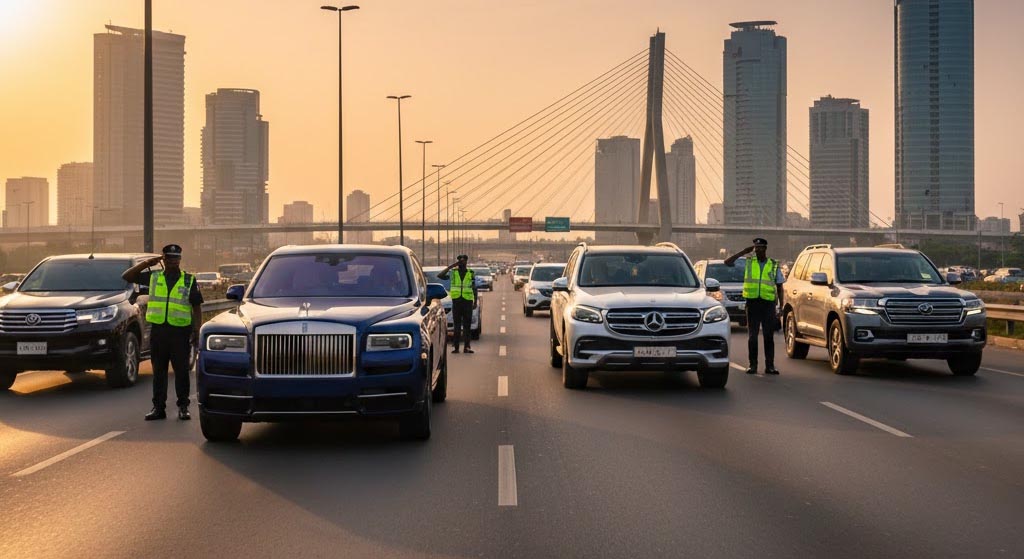
Discover the luxury cars that command instant respect from Nigeria Police. From Rolls Royce to latest Chinese models, see why these rides get a pass.
Driving on Nigerian roads is an art form. It is not just about knowing how to navigate the potholes in Lagos or the long stretches of the Benin-Ore expressway; it is about understanding the unspoken language of the road. At the heart of this language is the interaction between motorists and the Nigeria police. We have all been there: the dreaded wave of a yellow-sleeved arm, the "Park!" command, and the inevitable "Oga, anything for the boys?"
However, there is a certain class of vehicles that seem to possess an invisible shield. When these cars glide toward a checkpoint, the atmosphere changes. The aggressive flagging stops, the stern faces soften, and more often than not, the officer offers a respectful salute instead of a request for a driver's license. It is not just about the price tag; it is about the "big man" aura these machines project.
If you are looking to navigate Nigerian roads with minimal interruptions, here are the six types of cars the Nigeria police will almost never stop.
1. The Rolls-Royce: The Ultimate "Do Not Disturb" Sign
When a Rolls-Royce approaches a checkpoint, the atmosphere changes. Whether it is a Phantom or a Cullinan, the sheer presence of a Spirit of Ecstasy on the hood acts as a psychological barrier.
The logic is simple: in Nigeria, the owner of a Rolls-Royce is likely a monarch, a billionaire industrialist, or a high-ranking political figure. Stopping such a vehicle to "check for fire extinguisher" is not just a waste of time for the officer; it is a potential career risk. No junior officer wants to accidentally embarrass a man who might be on a first-name basis with the Inspector General of Police.
Driving a Rolls-Royce in Lagos or Abuja ensures that the only interaction you will have with the Nigeria Police is a snappy salute or a polite wave to keep moving. It is the gold standard of "privilege on wheels."
2. Toyota Land Cruiser and Prado: The Official Uniform
If you want to blend in with the Nigerian elite and avoid being flagged, the Toyota Land Cruiser (especially the LC300) and the Prado are your best bets. These cars are the unofficial "official" vehicles of the Nigerian government.
From Ministers to Senators and high-ranking military officers, the Land Cruiser is the "Big Man" default. Because so many of these vehicles are part of government convoys or belong to people with high-level security clearance, the Nigeria Police often assume the occupant is "one of them" or a "VIP."
-
Why they get a pass: Most Land Cruisers on Nigerian roads are either armored or carrying individuals with a police escort (MOPOL).
-
The Vibe: It screams authority and institutional power.
Unless there is a specific intelligence report, a Land Cruiser or Prado—especially in black or dark grey—is practically invisible to the average stop-and-search patrol.
3. Lexus LX 700h: The New King of the Road
In 2026, the Lexus LX 700h has become the ultimate status symbol for the "new money" and corporate titans in Nigeria. Following the massive success of the LX 570 and LX 600, the 700h (the hybrid version) has taken over the luxury SUV segment.
The Nigeria Police recognize the Lexus LX series as the vehicle of choice for top-tier CEOs and traditional rulers. Unlike the older Lexus models that might be associated with "Yahoo boys," the LX 700h is so expensive and rare that it commands immediate respect. When you are rolling in a car that costs upwards of 200 million Naira, the police assume you have your papers—and your connections—well in order.
4. Latest Model Hilux: The "Escort" Effect
The latest model of the Toyota Hilux, especially those with factory-tinted windows, occupies a unique space in Nigerian road culture. For years, the Hilux has been the workhorse for security agencies, oil companies, and VIP escort teams.
When the Nigeria Police see a clean, latest-model Hilux with dark windows, their first instinct is that it belongs to a security detail or a high-ranking government official. This is even more true if the vehicle is white or black.
-
The Tinted Advantage: While the police have recently renewed enforcement of tinted glass permits in January 2026, they rarely bother Hilux drivers. There is an unspoken assumption that the vehicle is on "official assignment."
-
Pro Tip: Keeping the vehicle clean and avoiding flashy aftermarket rims helps maintain that "official" look that keeps you moving through checkpoints.
5. Mercedes-Benz GL450 and GLS Series
The Mercedes-Benz GL450 (and the newer GLS models) remains the quintessential family SUV for the Nigerian upper-middle class and the elite. Mercedes-Benz has a long-standing reputation in Nigeria as the brand of "grace and legacy."
While the Nigeria Police might stop a C-Class or an older E-Class looking for young "G-Boys," the larger GL and GLS SUVs are viewed as "Daddy cars" or "Family cars." Officers generally believe that anyone driving a GLS 450 is a responsible citizen or a person of influence.
The interaction is usually very different. Instead of "Park! Let me see your driver's license," it is more likely to be "Oga, anything for the boys? Your boys are here o!" It is a request for a "gift" rather than an interrogation.
6. Latest Chinese Luxury Cars: The Mystery Factor
One of the most interesting shifts in 2026 is the respect given to the most recent Chinese luxury cars. Brands like GAC (specifically the GS8), Changan, and Jetour have flooded the Nigerian market with high-end SUVs that look incredibly futuristic and expensive.
Because these cars are relatively new to the scene, the Nigeria Police often don't know exactly who owns them, but they look so sophisticated that the officers play it safe. Many of these vehicles are now being used as official cars for State House members and top bank executives.
The "Mystery Factor" works in the driver's favor. If the police can't tell if you are a Tech Billionaire or a Government Contractor, they would rather let you pass than risk stopping a "Power Man."
The Reality of the Nigerian Road
While the car you drive plays a massive role in how the Nigeria Police treat you, it is important to remember that the "pass" is not always 100% guaranteed. Even in a Range Rover Autobiography, a polite "Good morning, Officer" goes a long way.
The Nigeria Police are increasingly using technology like the E-CMR (Electronic Central Motor Registry) to verify vehicles without even stopping them. However, the visual psychology of a luxury car remains the most effective way to avoid the "Park well" command.
Why Status Matters
In a perfect world, every car would be treated the same. But on the streets of Lagos, Port Harcourt, or Kano, the car is a filter. Luxury cars suggest that the owner has the resources to fight a legal battle or the influence to call a "Superior" if things go south. This realization keeps most roadside interactions brief and respectful.
Conclusion
Driving any of these six vehicles, from the Rolls-Royce to the latest Range Rover Autobiography, grants you a level of "road immunity" that is unique to the Nigerian experience. These cars represent more than just engineering; they are symbols of safety and status that the Nigeria Police have learned to respect over decades.
If you are looking to navigate Nigerian roads with minimal stress, investing in a vehicle that commands respect is just as important as having your papers in order. After all, in the eyes of law enforcement, the car often speaks before the driver even winds down the window.