
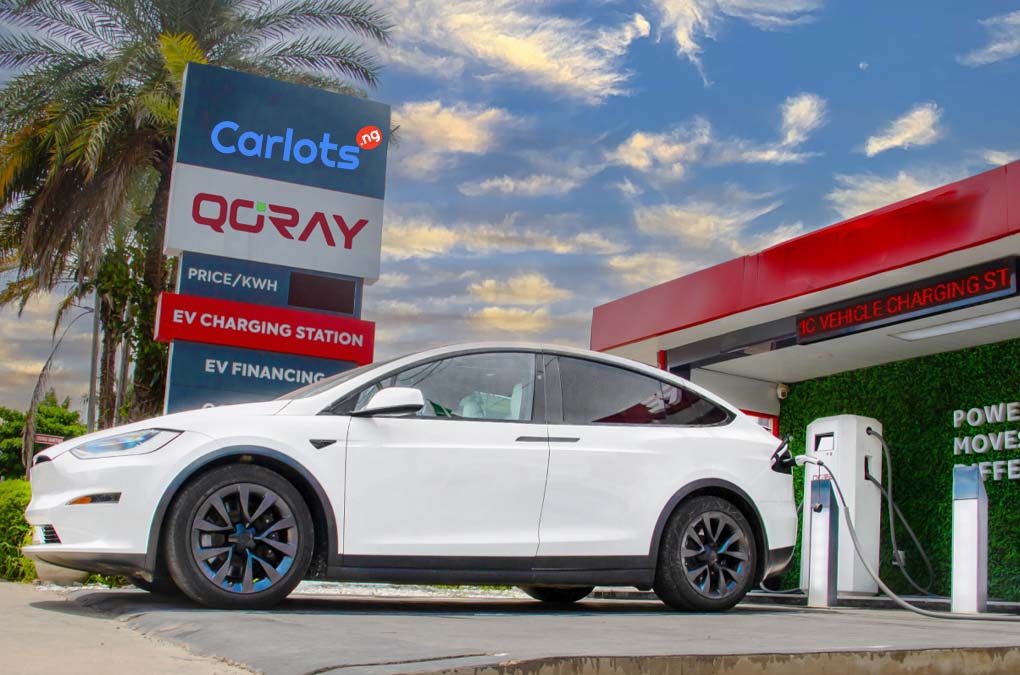
Just five years ago, the idea of spotting an electric vehicle (EV) on Nigerian roads sounded far-fetched. But fast-forward to 2025, and things have changed dramatically. From compact Chinese EVs like BYD and Changan to Spiro’s electric motorbikes weaving through Lagos traffic, Nigeria’s streets are slowly buzzing with battery-powered rides.
The big question for every potential EV owner remains: where do you charge?
That’s where companies like Qoray Mobility, Spiro, and a handful of government-backed projects come in. With Lagos leading the charge, followed by Abuja and regional pilot projects in Enugu and Sokoto, Nigeria’s EV charging network is growing—though still at an early stage.
This article provides a comprehensive 2025 list of EV charging stations in Nigeria, what they cost, and the trends shaping their future.
Lagos: The Commercial EV Capital
No surprise here, Lagos, Nigeria’s commercial nerve centre, has the highest concentration of charging points. Private companies like Qoray Mobility dominate the space, targeting high-traffic business districts, hotels, and affluent neighbourhoods.
Key EV Charging Stations in Lagos
| Station Name | Address | Details (Type, Power/Source, Cost) | Operator/Focus |
|---|---|---|---|
| Qoray – Marina Station | 20 Marina Road | AC: 22kW (₦300/kWh, Type 2, Type 1); DC Fast: 60kW (₦500/kWh, GBT, CCS2) | Qoray |
| Qoray – Adeola Odeku | 300 Adeola Odeku, Victoria Island | AC: 22kW (₦300/kWh, Type 2, Type 1, Tesla) | Qoray |
| Qoray – Sheraton Hotel, Ikeja | 30 Mobolaji Bank Anthony Way | AC: 22kW (₦300/kWh, Type 2); DC Fast: 60kW (₦500/kWh) | Qoray |
| Qoray – Marriot Hotel, Ikeja | 22 Joel Ogunnaike | DC Fast: 60kW (₦500/kWh) | Qoray |
| Qoray – Ikoyi Station | 12 Bourdillon Road, Ikoyi | AC: 22kW (₦300/kWh, Type 2) | Qoray |
| Qoray – Ilupeju Station | H948+6HF, Ilupeju | AC: 22kW (₦300/kWh, Type 2) | Qoray |
| University of Lagos Solar Station | Akoka, Yaba | Pilot: Solar-powered (∼15kVA capacity) | NADDC (Govt Pilot) |
| SAGLEV Charging Point | Mega Plaza Car Park (Rooftop), Victoria Island | AC/DC Chargers | SAGLEV Fleet |
| SAGLEV Charging Point | The Palms, Lekki, Lagos | AC/DC Chargers | SAGLEV Fleet |
| SAGLEV Charging Point | Marina Mall, Lagos | AC/DC Chargers | SAGLEV Fleet |
| Ecowaka Charging Station | 4/6 Kudirat Abiola Way, Ikeja | AC/DC Chargers | Ecowaka |
For Lagos drivers, Qoray has become the de facto commercial EV lifeline, while pilot projects like UNILAG’s solar station hint at a more sustainable future.
Abuja: Nigeria’s EV Policy Laboratory
As the nation’s political capital, Abuja is where most government-backed EV experiments begin. Partnerships between the Energy Commission of Nigeria (ECN), Nigerian Automotive Design and Development Council (NADDC), and private firms are gradually shaping a policy framework for EV adoption.
Key EV Charging Stations in Abuja
| Station Name | Address | Details (Type, Power/Source, Cost) | Operator/Focus |
|---|---|---|---|
| Charging Hub (Possible EVS) | 7 Hombori Street, Wuse II | DC Fast Charging | Possible EVS |
| ECN Hybrid EV Station | Plot 700, Garki | Solar/Grid Hybrid DC (∼30 mins full charge) | ECN/EMVC (Govt Pilot) |
| Jabi Lake Mall Charging Station | Jabi Lake Mall, Utako | Fast Charging | JEMAG Energy |
| A.Y.M Shafa Filling Station | Mabushi | Solar-powered EV Charger (NNPC/Nigus/Shafa pilot) | Public-Private |
Abuja’s charging model is more experimental, often tied to renewable energy research, with a mix of free or subsidised access.
Regional Pilot Stations
Beyond Lagos and Abuja, Nigeria’s EV infrastructure remains sparse. However, the NADDC has initiated solar-powered pilot charging stations in selected universities to test viability in other regions.
Regional EV Pilot Stations
| State | Station Name | Address | Details (Type, Power/Source, Cost) | Operator/Focus |
|---|---|---|---|---|
| Enugu | UNN Solar EV Station | University of Nigeria, Nsukka | Pilot: Solar-powered (∼15kVA capacity) | NADDC (Govt Pilot) |
| Sokoto | UDUS Solar EV Station | Usmanu Danfodiyo University | Pilot: Solar-powered (∼15kVA capacity) | NADDC (Govt Pilot) |
These stations may not yet meet commercial demand but are laying the groundwork for future nationwide rollout.
Comparing Commercial vs Government EV Networks
| Feature | Qoray Commercial Network | Govt/Pilot Stations (NADDC/ECN) | Key Takeaway |
|---|---|---|---|
| Location | Lagos (Hotels, Business Hubs, Affluent Areas) | Abuja, Lagos, Enugu, Sokoto (Universities, Govt Offices) | Commercial = revenue-driven; Govt = research-driven |
| Charging Type | AC 22kW & DC 60kW | Mostly Solar AC (15kVA) or Hybrid DC | Commercial faster & pricier; Govt greener & subsidized |
| Energy Source | Grid-powered (with backup) | Solar or Solar/Grid Hybrid | Sustainability gap between private vs public |
| Pricing | ₦300/kWh (AC) / ₦500/kWh (DC) | Often free or subsidized | Govt easing entry costs for early adopters |
The Bigger Picture: Where Nigeria’s EV Market Is Headed
- Chinese Automakers Lead the Charge: Most EVs entering Nigeria are from BYD, Chery, and Changan. They are cheaper than Western alternatives and better suited for mass adoption.
- Two-Wheelers Are Surging: Companies like Spiro are focusing on e-bikes, targeting Lagos commuters with affordable lease-to-own plans.
- Energy Costs Remain a Barrier: At ₦500/kWh for DC fast charging, powering an EV is still more expensive than running a small petrol car—unless subsidies kick in.
- Infrastructure Gap: Outside Lagos and Abuja, charging stations are almost non-existent. This is slowing adoption beyond city centers.
Conclusion: Nigeria’s EV Transition Is Real, but Uneven
Nigeria’s EV landscape in 2025 is a tale of two cities. Lagos enjoys rapid private-sector growth, while Abuja remains the testing ground for government-backed pilot stations. Outside these hubs, adoption is still in its infancy.
For now, if you’re buying an EV in Nigeria, you’re best served in Lagos or Abuja, with Qoray dominating the commercial scene and NADDC projects setting the foundation for future expansion.