
When a brand new Gulfstream G650 or Bombardier Global 7500 whispers onto the tarmac at the private wing of Murtala Muhammed Airport in Lagos, it’s more than just an arrival. It’s a statement. In Nigeria, the private jet is the undisputed crown jewel of success, the ultimate symbol that you have not just “arrived,” but that you own the building.
We see the headlines, we hear the whispers of $50 million, $60 million, or even $70 million price tags. In our minds, that’s the entire mountain to climb.


But let’s be completely clear. For the individuals and corporations playing at this level, that eight-figure price tag, while staggering, is just the entry ticket. It’s the “welcome drink.”
The real story, the one that separates the truly wealthy from the temporarily rich, isn’t about buying the jet. It’s about keeping it.
The brutal, non-stop, and eye-watering cost of maintenance is the financial dragon that many new owners are unprepared for. The purchase price is a one-time splash; the upkeep is a continuous, multi-million dollar ocean.
So, let’s pull back the curtain. Forget the glamour of the purchase for a moment. What does it really cost to keep a private jet in the air, and on the ground, in Nigeria?
The Initial Hurdle: A Quick Look at the Purchase Price
Before we get to the main event, let’s set the stage. The private jet cost for acquisition varies wildly. You are essentially buying a flying luxury apartment that moves at over 900 kilometres per hour.
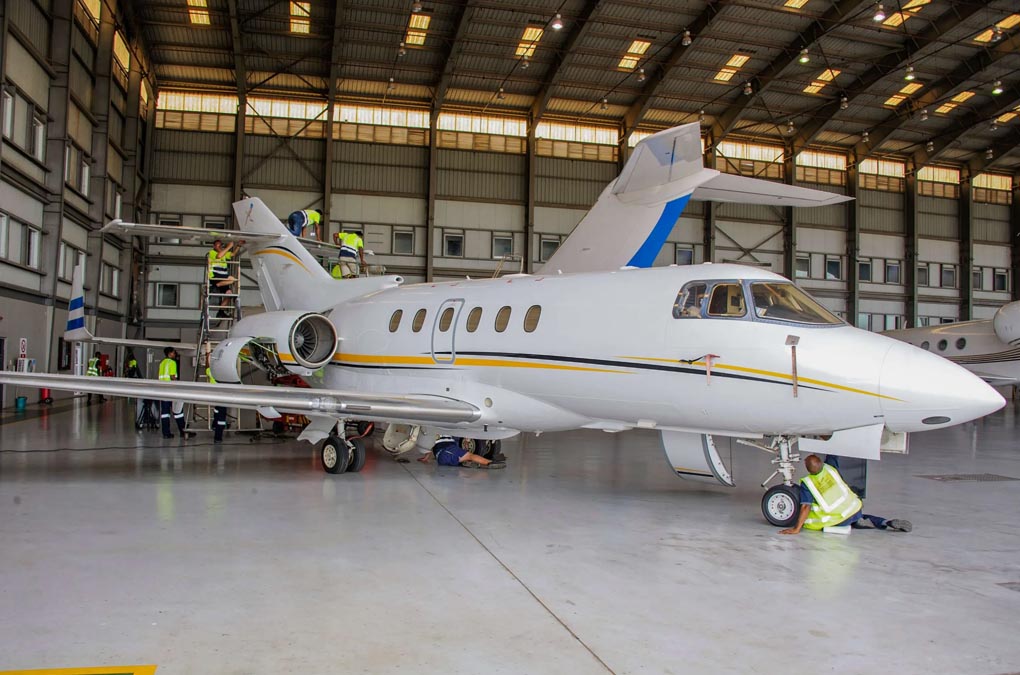
- Pre-Owned (Tokunbo): A “fairly used” light or mid-size jet, perhaps an older Hawker 800XP or a Learjet 60, might start from $2 million to $5 million.
- Brand New (Tear Rubber): This is where the big boys play. A new mid-size jet, like a Cessna Citation Latitude, runs around $18 million. A top-of-the-line, long-range bird like a Gulfstream G650 will set you back $65 million or more.
In Naira, we are talking billions. It’s a jaw-dropping amount. But here’s the secret: this is often the easiest part of the journey. Aviation experts say a good rule of thumb is that you should expect to spend 10% to 15% of the jet’s purchase price every single year just to keep it.
Let’s break that 10-15% down.
The ‘Oga’s’ Budget: Unmasking the Fixed Costs
Fixed costs are the bills you must pay every single month, whether your jet flies to London or just sits in the hangar in Abuja for 30 days straight. These are the silent killers of a private jet budget.
Hangar and Parking Fees
You cannot park your N50 billion asset on the street. You need a hangar to protect it from the harsh sun, tropical rain, and for basic security.
- Hangar Space: In high-demand airports like Lagos (MMA) or Abuja (NAIA), securing a dedicated hangar is a battle. The cost can range from $5,000 to over $20,000 (N5.5 million to N22 million) per month.
- Ramp Parking: If you choose to park it on the ramp (the open-air tarmac), it’s cheaper, but you still pay daily or monthly fees, and the jet is exposed. This can still be a few hundred dollars a day.
Crew Salaries and Training
A private jet is not a car you can just decide to drive. It requires a highly skilled, professional team. At a minimum, you need two pilots (a Captain and a First Officer) who are “type-rated” specifically for your exact model of jet.
- Pilot Salaries: This is a major expense. Captains for mid-size to large-cabin jets are in high global demand. They command salaries from $100,000 to $250,000+ per year, each. The First Officer will be in a similar, slightly lower range. You are looking at $300,000 to $450,000 a year just for your pilots.
- Flight Attendant: For larger jets, a full-time, professionally trained cabin crew member is standard. Add another $50,000 to $80,000 annually.
- Recurrent Training: Pilots must undergo intense simulator training every 6 to 12 months to stay certified. This is non-negotiable. This training costs $30,000 to $80,000 per pilot, per session.
Insurance: The Non-Negotiable Shield
You absolutely cannot fly an uninsured aircraft. The insurance is broken into two parts: hull insurance (to cover the value of the plane itself) and liability insurance (to cover passengers and damage on the ground).
For a $20 million jet, the annual insurance premium can easily be $100,000 to $300,000 (N110 million to N330 million). The newer and more expensive the jet, the higher the premium.
Management and Software
Most owners don’t have the time or expertise to manage their own aviation business. They hire a private jet management company to handle crew scheduling, flight planning, maintenance tracking, and regulatory compliance (which is a full-time job).
- Management Fees: This service adds another $5,000 to $20,000 per month.
- Subscriptions: You also have to pay for navigation chart updates, weather services, and scheduling software, which can add up to $25,000 a year.
Let’s do a quick sum. Just on these fixed costs, a jet owner is spending $600,000 to $1 million (N660 million to N1.1 billion) per year.
And the jet hasn’t even started its engines.
The Real Drain: Variable Costs (The Cost of Flying)
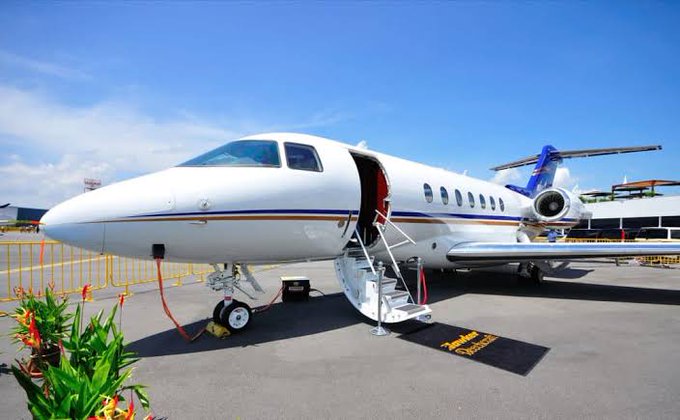
This is where the numbers truly become frightening. Variable costs are tied directly to how much you fly. They are typically calculated per flight hour.
Aviation Fuel (Jet A1): The Nigerian Nightmare
This is, without a doubt, the single biggest variable cost and the most volatile factor in Nigeria. The price of Jet A1 fuel is a constant source of pain for all airlines, private and commercial.
- Consumption: A mid-size jet, like a Challenger 350, burns approximately 350 gallons (about 1,300 litres) per hour. A larger jet, like a Gulfstream, can burn 500+ gallons per hour.
- The Price: The price of Jet A1 in Nigeria has been famously unstable. In the last year alone, we have seen it spike from below N900 per litre to as high as N1,500 per litre.
Let’s do the maths. If fuel is N1,400 per litre, that mid-size jet costs N1.82 million (approx. $1,650) for one hour of flying. A simple 3-hour round trip from Lagos to Abuja and back could cost N5.46 million in fuel alone.
Maintenance, Repairs, and Overhauls (MRO)
This is the big one. An aircraft is one of the most complex machines on earth, and its maintenance is mandated by law. You cannot “manage” it or “call your mechanic.”
- Scheduled Checks: Planes have routine checks (A, B, C, D checks). An ‘A Check’ might be minor, but a ‘C Check’, which comes every few years, can take the plane out of service for weeks and cost $500,000 to $1 million.
- Unscheduled Maintenance: Things break. A bird strike, a faulty sensor, a tyre replacement (which costs thousands of dollars, not thousands of Naira) can happen at any time.
Engine Reserves (The Billion-Naira Bill)
This is the cost that bankrupts new owners. Jet engines have a limited lifespan before they require a complete overhaul. This isn’t a suggestion; it’s a legal requirement.
- The Cost: A single-engine overhaul can cost $1 million to $4 million.
- The “Smart” Way: Smart owners or management companies “save” for this by putting aside money for every single hour the plane flies. This is called an Engine Reserve Program. This can be $500 to $1,500 per hour.
So, on top of the N1.82 million for fuel, you are adding another N1.1 million ($1,000) per hour just to save for the inevitable engine repair.
Landing Fees, Handling, and ‘Settlement’
You don’t just land a plane for free.
- Landing Fees: Every airport charges a fee based on the weight of the aircraft.
- Ground Handling: This is the service that guides the plane to park, handles baggage, provides a VIP lounge, and arranges customs. In Nigeria, this can be $1,000 to $3,000 per stop.
- Crew Expenses: If you fly to London and stay for three days, you are paying for the hotel, transport, and daily allowance (per diem) for your pilots and cabin crew.
So, What’s the Total Bill?
Let’s tie it all together for a mid-size private jet valued at $15 million, flying a relatively modest 200 hours per year.
- Fixed Costs (Annual):
- Crew Salaries & Training: $400,000
- Hangar/Parking: $120,000
- Insurance: $150,000
- Management & Software: $100,000
- Total Fixed: $770,000 (approx. N850 Million)
- Variable Costs (for 200 Hours):
- Fuel (at $1,650/hr): $330,000
- Maintenance & Engine Reserves (at $1,200/hr): $240,000
- Handling, Landing & Crew Expenses (at $800/hr): $160,000
- Total Variable: $730,000 (approx. N800 Million)
Grand Total Annual Cost: $1,500,000
That is 1.65 Billion Naira. Every single year.
And this is a conservative estimate. Recent industry reports suggest the all-in maintenance and operating cost for a mid-size jet in Nigeria can easily range from $1 million to $3 million (N1.1 billion to N3.3 billion) annually.
This is why you hear of jets being “grounded” or impounded. The owner might have had the N20 billion to buy it, but they couldn’t sustain the N2 billion every year to keep it.
The “Smarter” Alternatives: Charter and Fractional Ownership
This is why many wealthy Nigerians have concluded that full ownership is a bad business decision unless you are flying over 400 hours a year.
- Chartering: This is the “pay-as-you-go” model. You call a charter company, book a jet for your trip, and pay a simple hourly rate. In Nigeria, this can range from $4,000 to $8,000 (N5.6 million to N11.2 million) per hour. When the trip is done, you walk away. No crew, no maintenance, no insurance.
- Fractional Ownership: This is where you buy a “share” (e.g., 1/16th) of a jet. You get 50 hours of flying time per year, and you share all the fixed costs with 15 other owners. It’s a popular model globally that is gaining traction here.
Conclusion: An Asset or a Business?
A private jet is not an asset like a house in Banana Island. A house appreciates (hopefully) and has low running costs. A private jet is a depreciating asset with the running costs of a medium-sized airline.
The next time you see that sleek jet gleaming on the tarmac, don’t just admire the purchase price. Respect the massive, relentless, and invisible ocean of cash required just to keep it sitting there, ready to fly.