
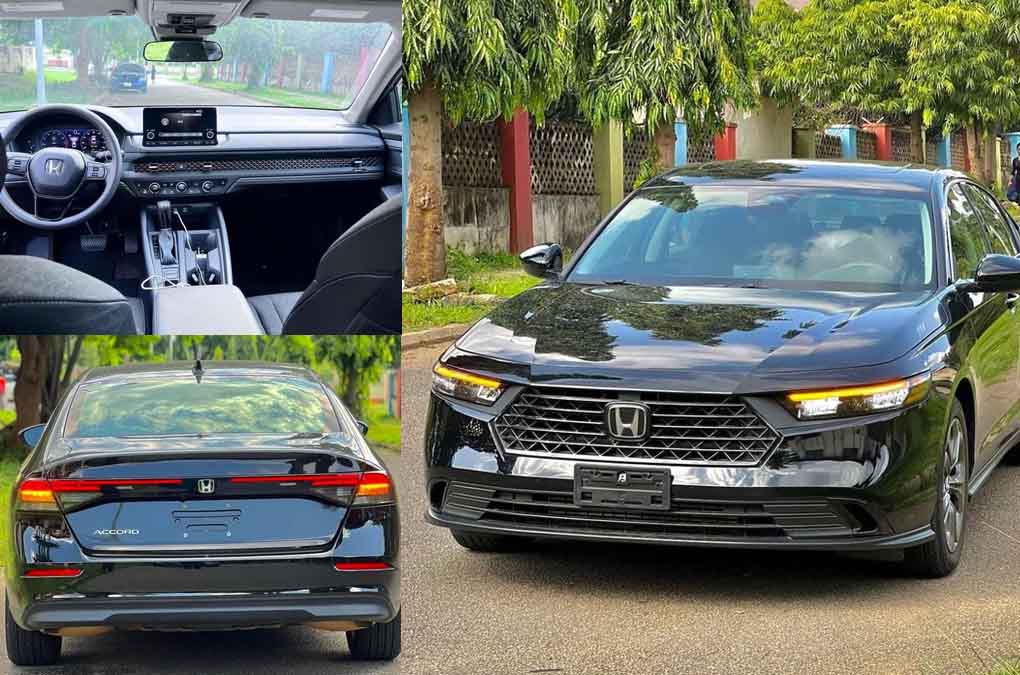
The love affair between Nigerian drivers and the Honda Accord is no accident. For decades, from the boxy, reliable models of the 90s to the sleek, tech-loaded sedans of today, the Accord has consistently earned a place of high esteem, often rivalled only by its Toyota counterparts. It is more than just a car; for many Nigerian families and young professionals, owning a Honda Accord signifies a perfect balance of durability, style, and status, a car that says, “I have arrived, but I am also smart about my money.”
In a country where road conditions are often a survival test and where fluctuating exchange rates make vehicle pricing a wild, ever-moving target, choosing the right car is a critical financial decision. So, as we settle into 2025, we take a deep dive into the legacy of the Honda Accord cars, offering a comprehensive review and breaking down the real cost of ownership for the Nigerian buyer. We’re looking beyond the sticker price to maintenance, fuel economy, and that all-important Nigerian factor: spare parts availability.
The Enduring Appeal: Why the Honda Accord Still Rules

Walk into any major car market in Lagos, Abuja, or Port Harcourt, and you will see a bustling trade in various generations of the Accord. The loyalty is rooted in a few key pillars of the brand:
- Legendary Durability: The older generations, especially the “End of Discussion” (2003–2007) and the following model (2008–2012, often called the “Evil Spirit” for its aggressive styling), are practically immortal. They can take a beating from Nigerian roads and keep going with minimal fuss, a trait every driver here cherishes.
- Ease of Maintenance: In Nigeria, a car’s true value is often tied to how easily and affordably it can be fixed. Mechanics across the country are intimately familiar with Honda Accord cars, and spare parts, whether original or aftermarket, are widely available and relatively inexpensive.
- Fuel Efficiency: While the powerful V6 models exist, the 4-cylinder options (especially the 2.4-litre engines in older models and the modern 1.5L Turbo in newer ones) offer excellent fuel economy. With the rising cost of petrol, this factor alone makes the Accord a budget-friendly champion.
Deconstructing the Generations: Which Accord is Right for You?
The Accord line-up is vast, and your choice will depend heavily on your budget and what you prioritise: raw reliability or modern luxury.
The Classics: 2003–2012 (The ‘End of Discussion’ & ‘Evil Spirit’)
If your budget is modest and reliability is your only concern, these are your best bet.
H3: 7th Generation (2003–2007): The ‘End of Discussion’
This model is a fortress. Its 2.4L four-cylinder engine is globally praised. It is simple, dependable, and its reputation for low maintenance is the reason it earned its famous nickname. The ride is comfortable, though the interior tech is obviously dated by 2025 standards.
- The Nigerian Test: Excellent ground clearance for its time, simple mechanics that any local technician can manage, and parts that are found everywhere, from Ladipo to Iwo Road.
- Things to Watch Out For: Age-related wear and tear, especially with the automatic transmission if it hasn’t been properly maintained. Always check the suspension mounts.
H3: 8th Generation (2008–2012): The ‘Evil Spirit’
Bigger, bolder, and more stylish. The 8th gen refined the driving experience, offering a more spacious cabin. The 2.4L engine remains the popular choice, though the V6 offers a thrilling, if fuel-thirsty, ride.
- The Nigerian Test: Still robust, but the added complexity and size mean slightly more intricate maintenance than the 7th gen. It still handles Nigerian traffic and bad roads with commendable grace.
- Things to Watch Out For: Electrical issues can crop up in poorly maintained ‘Tokunbo’ units; ensure all components like the AC and power windows are working perfectly.
The Modern Era: 2013–Present (Sophistication and Tech)
These models cater to a buyer who wants modern features, advanced safety, and superior driving dynamics.
H3: 9th Generation (2013–2017)
This generation introduced a significant leap in interior quality and technology, with features like a touchscreen infotainment system and, in later models, the Honda Sensing safety suite. The styling is less aggressive and more streamlined.
- The Nigerian Test: It offers a smoother, more refined highway experience, but parts for the newer electronic components may be slightly harder to find than for the older models. The ride height is decent, though not as forgiving as the 7th Gen.
- Things to Watch Out For: The Continuous Variable Transmission (CVT) in some models requires strict, timely fluid changes. Failure to do so can lead to expensive repair bills.
H3: 10th/11th Generation (2018–2025)
The latest Honda Accord cars are practically luxury sedans. They feature striking, coupe-like fastback styling, turbocharged engines (a 1.5L turbo being common), and sophisticated interiors. For 2025, newer models are highly praised globally for their hybrid options and advanced safety technology.
- The Nigerian Test (The “Nigerian Spec”): Some newer models imported by authorised dealers feature a raised ride height specifically for the West African market, a huge plus for navigating Lagos and Abuja roads. The 1.5L Turbo is extremely fuel-efficient, offering great savings, but it demands high-quality fuel and more specialised servicing.
- Things to Watch Out For: These are still relatively new in the Nigerian used car market, meaning sourcing speciality parts (like turbo components or advanced sensors) outside of authorised dealers can be difficult and costly.
The Real Cost in 2025: Price, Fuel, and Maintenance Breakdown
This is the segment every Nigerian buyer truly cares about. The price of a car is only half the story; the real cost is what you spend over the lifetime of ownership. Due to the high volatility of the Naira-Dollar exchange rate, these prices are best estimates based on current market trends for clean, foreign used (Tokunbo) units as of 2025.
Estimated Acquisition Price (Foreign Used, Tokunbo)
| Accord Generation/Year | Estimated Price Range (₦) | Ideal Buyer Profile |
| 7th Gen (2003–2007) | ₦2,500,000 to ₦4,500,000 | Budget-conscious, seeking ultimate reliability. |
| 8th Gen (2008–2012) | ₦4,800,000 to ₦8,000,000 | Family car, good balance of style, space, and ruggedness. |
| 9th Gen (2013–2017) | ₦10,000,000 to ₦16,000,000 | Executive, prioritising luxury, safety tech, and performance. |
| 10th Gen (2018–2020) | ₦18,000,000 to ₦28,000,000+ | Executive, prioritizing luxury, safety tech, and performance. |
Note: New or zero-mileage 2024/2025 models will start from ₦35,000,000 and upwards, depending on trim and dealer pricing.
Fuel Consumption: The Daily Reality
The good news is that most Honda Accord cars are inherently fuel-efficient.
- Older 4-Cylinder Models (2.4L): Expect combined consumption figures that translate to roughly 8-10 km/L in real-world Nigerian driving (traffic and all). This is excellent for its class.
- Newer 4-Cylinder Turbo (1.5L): These offer the best economy, potentially pushing into the 12-14 km/L range on the highway, a significant saving in the long run.
- V6 Models (3.5L): Be prepared for a higher fuel bill, with consumption often dropping to 6-8 km/L, especially in heavy city traffic. Performance comes at a cost.
Maintenance & Repair Cost: The Long-Term View
This is where the Accord truly shines for the Nigerian owner.
- Scheduled Servicing: Basic oil change and filter replacements are very affordable. Expect to pay between ₦15,000 and ₦30,000 for routine service, depending on the oil and filter quality you choose.
- Major Repairs (Engine/Transmission): For the older models, major issues are rare if maintenance is consistent. Even if they occur, the widespread availability of mechanics and parts drastically reduces labour costs and the time the car spends in the workshop. For newer models, the cost of specialised parts (like sensors or turbo components) is naturally higher and requires a diagnostic computer.
- Resale Value: One of the Accord’s biggest hidden financial benefits is its strong resale value. A well-maintained Accord holds its price remarkably well in the Nigerian market, often offsetting a significant portion of the initial purchase price when you decide to upgrade.
What Nigerian Drivers Say: Real-Life Testimonials

We spoke to two loyal Accord owners to ground the numbers in reality.
Mr. Femi (52, Businessman, Lagos): “I bought my 2005 ‘End of Discussion’ in 2010. It was already Tokunbo, so I’m the second owner here. Honestly, the only things I change are tyres, brake pads, and engine oil. The suspension has been fixed once, five years ago. It handles the trenches near my office better than some SUVs. If you want a car to just work without drama, that is it. It’s affordable to run, and when the time comes, my mechanic, Baba, fixes it with his eyes closed.”
Mrs. Ada (34, Banker, Abuja): “My 2017 model is my first ‘big girl’ car. I love the style and the interior is really comfortable for my commute. The fuel consumption is great for a big sedan. My only complaint is that when I needed a sensor replaced last year, I had to wait three weeks for the part to be flown in, and the specialized mechanic charged me a premium. It’s a great car, but it’s not as ‘plug-and-play’ as my father’s old model.”
This difference in experience highlights the unavoidable trade-off: convenience and affordability of maintenance drop as you move from older, purely mechanical Accords to newer, tech-laden generations.
Final Verdict and Buying Advice for 2025
The Honda Accord cars remain an outstanding choice for the Nigerian market in 2025, but your best purchase depends entirely on your situation.
- For the Cost-Conscious Buyer: Stick with the 7th or 8th Generation (2003–2012). They are dependable, the cheapest to maintain, and the most familiar to local mechanics. You sacrifice modern features but gain unparalleled peace of mind.
- For the Executive/Luxury Buyer: The 10th Generation and newer are perfect. The styling, safety, and fuel efficiency (especially with the 1.5L Turbo or Hybrid) are world-class. Just be prepared for higher repair costs for specialised parts and ensure you have access to a qualified Honda specialist.