
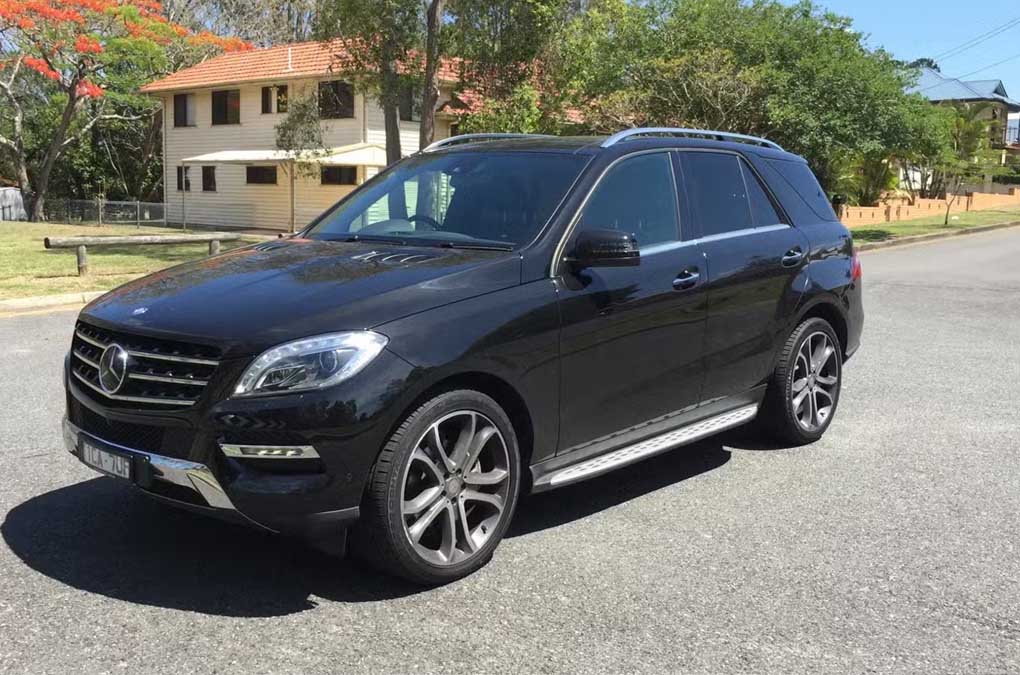
Across Nigeria’s roads, from Lagos to Abuja, from Ibadan to Port Harcourt, few SUVs attract the same respect as the Mercedes-Benz ML350. Though not the newest Mercedes SUV, and certainly not the most technologically advanced, it remains the brand’s most trusted option in the Nigerian market. In a country where road conditions, fuel quality, weather and maintenance culture challenge even the best-engineered vehicles, the ML350 has distinguished itself through reliability, ruggedness and long-term durability.
SUV competition in Nigeria is intense. Toyota, Lexus, Honda and BMW all dominate different price brackets, and within Mercedes-Benz’s lineup itself, you’ll find modern contenders like the GLE and GLS. Yet in the discussion of real-world reliability, not showroom shine, the ML350 consistently comes out on top. It is a vehicle that thrives in the Nigerian environment and has built its reputation through years of service on roads that punish anything less than well-built engineering.
Table of contents
- Understanding Reliability in the Nigerian SUV Market
- How the ML350 Fits Into Mercedes-Benz’s Lineup in Nigeria
- The Global ML-Class Legacy and Its Dependability
- Why the ML350 Ranks as the Most Reliable Mercedes SUV in Nigeria
- The Nigerian Market Price for ML350
- Price Comparison: ML350 vs Other Matching SUVs in Nigeria
- What You Get for the ML350’s Price
- ML350 vs GLE: Should You Pay More?
- How the ML350 Compares to Lexus and Toyota Rivals
- Real Experiences That Shape the ML350’s Reputation
- ML350 Maintenance and Longevity
- Conclusion
The ML350’s reliability is not a marketing claim. It comes from thousands of Nigerian drivers who have lived with the vehicle in the harshest conditions and swear by its performance. And in today’s market, where SUVs have become lifestyle essentials, not just luxury purchases, the ML350 stands tall as one of the smartest long-term automotive investments in the country.
Understanding Reliability in the Nigerian SUV Market

Reliability in Nigeria is a concept that differs significantly from reliability in Europe or the United States. Nigerians judge vehicles by how they cope with potholes, rough surfaces, uneven road shoulders, heavy rainfall, inconsistent fuel quality and long-distance travel across multiple states. The vehicle must be strong enough to withstand challenges without constantly requiring repairs.
This is where the ML350 shines. It is engineered with a level of ruggedness rarely seen in modern luxury SUVs. It handles heat well, maintains engine temperature even during extended trips, and doesn’t become electronically overwhelmed by humidity or dust. Nigerian drivers respect vehicles that can last, that stay cool under stress, and that don’t suddenly start flashing warning lights because of a minor electrical issue. The ML350 excels in all these conditions.
How the ML350 Fits Into Mercedes-Benz’s Lineup in Nigeria
Within Mercedes-Benz’s SUV family in Nigeria, the ML350 sits in a sweet spot. The compact GLK is popular for city driving but doesn’t offer the size, prestige or road presence many Nigerian SUV buyers want. The GLE is modern and attractive, but it introduces more complex electronics that often lead to expensive maintenance bills. Larger models like the GL450 and GLS provide more cabin space, but their air suspension systems and high fuel consumption discourage many buyers.
The ML350 strikes the perfect balance: big enough to command presence, luxurious enough to feel premium, rugged enough to conquer rough roads, sophisticated but not overly complicated. It is this balance of practicality and luxury that Nigerians appreciate most.
The Global ML-Class Legacy and Its Dependability
Before Mercedes renamed the ML-Class as the GLE, the ML350 was its flagship mid-size luxury SUV. Globally, it built a reputation for its strong V6 engine, stable transmission and long-term durability. Reviewers around the world often noted that the ML-Class felt like a vehicle engineered to last decades, not years.
This global reliability translates perfectly into the Nigerian market. The ML350 avoids excessive electronic systems that newer models rely heavily on. Components are more mechanical than digital, meaning they don’t easily fail due to moisture, dust or voltage fluctuations, common issues with newer SUVs in Nigeria.
The ML350 is old enough to be proven and new enough to feel modern. It belongs to a golden era when Mercedes-Benz prioritised durability as much as comfort.
Why the ML350 Ranks as the Most Reliable Mercedes SUV in Nigeria
One major reason the ML350 earned its reputation is the powerful 3.5-litre V6 engine. It is a naturally aspirated engine known worldwide for long life, smooth performance and resistance to overheating. Turbocharged engines in newer SUVs, while efficient, do not tolerate the Nigerian fuel landscape as well.
The ML350’s suspension is built to absorb uneven terrain effectively. Many Nigerian owners drive the vehicle between states with confidence, knowing that bumps, gravel and potholes won’t compromise the vehicle’s balance. This sense of stability is something you feel immediately when you sit behind the wheel.
Equally important is the ML350’s simplicity. It contains far fewer ultra-sensitive sensors and advanced modules than the GLE or GLC. This makes it far easier to diagnose and repair across Nigerian mechanic workshops. A malfunctioning sensor that costs ₦600,000 on a GLE might not even exist on an ML350.
Spare parts availability is another advantage. Lagos markets like Ladipo and Festac, or Abuja markets like Apo Mechanic Village, are well-stocked with ML350 components. Parts are available as both brand-new and “Belgium” options, making maintenance predictable and accessible.
The Nigerian Market Price for ML350
Prices fluctuate depending on model year, mileage and general condition. But across Nigeria in 2024–2025, ML350 price trends follow consistent patterns:
- Older models like 2010 ML350s usually fall around ₦13–16 million.
- 2012–2013 popular models range from ₦18–26 million, depending on mileage and how clean they are.
- Later models like 2014–2015 ML350s — especially tokunbo — typically fall between ₦28–31 million.
A clean, duty-paid, foreign-used ML350 with moderate mileage commonly lands between ₦25–30 million, making it far more affordable than newer luxury SUVs while offering a reliability record they cannot match.
Price Comparison: ML350 vs Other Matching SUVs in Nigeria
To understand how well the ML350 holds its value, you need to compare it with similar SUV options that Nigerian buyers consider.
Here is a detailed breakdown:
Price and Value Comparison Table for the Nigerian Market
| SUV Model | Mercedes-Benz ML350 | Strengths | Weaknesses | Overall Value |
|---|---|---|---|---|
| Mercedes-Benz GLE350 | ₦25M – ₦30M | Rugged engine, excellent suspension, high resale value, widely available parts | Slightly higher fuel consumption than non-luxury SUVs | Best price-to-reliability ratio in luxury segment |
| Affordable maintenance, dependable, and good fuel economy | ₦65M – ₦85M | Modern, stylish, advanced features | Very expensive to maintain; sensitive electronics | High status but costly long-term |
| Lexus RX350 | ₦28M – ₦40M | Great fuel economy, simple maintenance, strong resale value | Less rugged than ML350 on bad roads | Best for fuel-conscious luxury buyers |
| Toyota Highlander | ₦18M – ₦30M | Best price-to-reliability ratio in the luxury segment | Less premium feel, less powerful | Best mid-budget family SUV |
| BMW X5 (2012–2015) | ₦20M – ₦30M | Stylish, fast, sporty ride | High maintenance cost, complex electronics | Great when clean, risky long-term |
This table shows that while some SUVs are cheaper and some are more modern, the ML350 offers the best blend of durability, prestige and long-term value — especially at its price point.
What You Get for the ML350’s Price
The ML350’s pricing becomes more reasonable when you assess what it delivers. For starters, the vehicle boasts exceptional long-distance comfort. The seats, cabin insulation and ride quality make even a 5-hour journey feel manageable. Fuel consumption is moderate, and while it will not compete with a Toyota Corolla, it’s efficient for a vehicle of its size and class.
The air-conditioning system remains one of its standout features. Nigerian owners often praise how quickly it cools the cabin even during extreme heat. This may sound simple, but anyone who has sat in traffic during a Lagos heatwave understands how essential a powerful AC system is.
Safety plays another major role. Even older ML350s come with strong safety systems — airbags, stability control, anti-lock braking — which contribute to the SUV’s dependability.
And finally, there is resale value. A clean ML350 rarely stays long in dealer lots. Buyers trust the model, and this trust translates into sustained demand and excellent resale prices.
ML350 vs GLE: Should You Pay More?

For many Nigerian buyers, the biggest debate is whether to choose a newer GLE or a more established ML350. The GLE offers a modern cabin, updated design and advanced tech, but all these enhancements come at a cost, and not only in the price tag.
The GLE relies heavily on sensitive electronic modules. These systems work brilliantly when new, but Nigerian weather, dust and fuel quality often introduce complications. Repairs on a GLE are significantly more expensive and require specialised technicians and diagnostic equipment.
The ML350, on the other hand, is less complicated and far more forgiving. Its mechanical systems are tried-and-tested, making it a better option for buyers who prioritise peace of mind and lower maintenance costs.
How the ML350 Compares to Lexus and Toyota Rivals
The Lexus RX350 competes strongly with the ML350 in Nigeria. It offers better fuel efficiency and inexpensive maintenance, which appeals to many Nigerian families. But where the RX350 falls short is ruggedness. It is comfortable on good roads, but on rough terrain — or during flood season — the ML350 holds up better.
The Toyota Highlander is another strong competitor. It is dependable, cheaper to maintain and offers a long lifespan. However, it cannot replicate the ML350’s luxurious feel, solid presence and prestige. Nigerians who want a combination of power and class often choose the ML350 over the Highlander.
Real Experiences That Shape the ML350’s Reputation
Ask a mechanic in Lagos, and you’ll often hear something like, “If a Benz SUV must stay out of my workshop for long, let it be the ML350.”
Dealers say the same. Cars like the GLE may look fresh, but they return for repairs more often. The ML350, despite being older, behaves like a disciplined machine, predictable, sturdy, and less prone to surprises.
One Abuja banker shared that after driving an ML350 for four years, he only replaced routine maintenance parts and tyres, nothing major. For long trips from Abuja to Kaduna or Jos, he preferred the ML350 because it felt stable and trustworthy.
These stories are not isolated. They form the collective testimony of thousands who have owned and driven the ML350 across different regions of Nigeria.
ML350 Maintenance and Longevity
ML350s age remarkably well. Owners who follow basic servicing schedules, oil changes, brake checks, and suspension refreshes rarely encounter the kind of catastrophic failures that plague newer, more delicate SUVs. The SUV remains composed even past the 200,000 km mark, proving that durability is part of its DNA.
The availability of spare parts keeps maintenance costs stable. Mechanics understand the ML350, making repairs straightforward. This local compatibility is one of its greatest strengths.
Conclusion
The Mercedes-Benz ML350 remains the most reliable SUV from the brand in Nigeria because it strikes the perfect balance between engineering strength, comfort, practicality and long-term value. Its price makes it accessible to a wide range of luxury buyers, and when compared to GLEs, Lexus models, Highlanders and BMWs, it consistently offers the most dependable ownership experience.
For Nigerian drivers who want an SUV that can withstand rough roads, handle long trips, maintain prestige, and still be easy to maintain, the ML350 stands tall as one of the best automotive choices available today.