
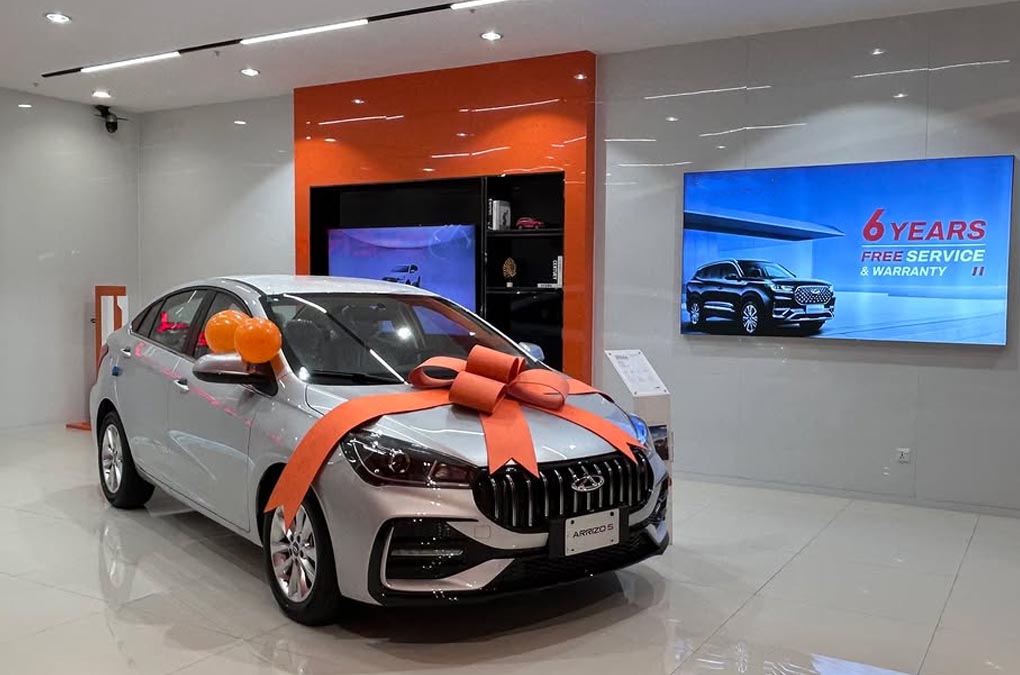

Let’s be honest. For most Nigerians, the dream of buying a “tear rubber” car feels more distant than ever. You walk into a showroom, see the gleaming metal, inhale that new-car smell, and then… You see the price tag. The sticker shock is real.
In a heartbeat, you’re back on your phone, scrolling through “Tokunbo” (foreign-used) options, calculating shipping and clearing costs, and praying you don’t end up with a car that has “hidden faults.”

But what if there was a way to get that 0km, warranty-backed, brand-new car experience for a price that is significantly cheaper than a fully imported one?
This isn’t about some secret government contact or a container-smuggling loophole. The secret is hiding in plain sight. It’s the strategy behind cars with duty-free (or, more accurately, low-duty) status. And the way you get them is by buying brand new cars that are assembled right here in Nigeria.
What Does “Cars With Duty Free” Really Mean in Nigeria?

Let’s clear up a major misconception. When we talk about “cars with duty-free” status in this context, it doesn’t mean a car imported from Germany or Japan with zero customs charges. That’s a myth.
The real story is the National Automotive Industry Development Plan (NAIDP).
In simple terms, the Nigerian government wants to create jobs and boost our local industry. To encourage global car brands to build assembly plants in Nigeria, they made them a deal:
- If you import a Fully Built Unit (FBU), a car that is 100% finished overseas, you will pay a heavy price. This includes a 35% import duty plus a 35% levy, totaling a staggering 70% (before other port charges). This is why a brand-new, imported Toyota Camry costs a fortune.
- But… if you set up a plant and assemble that same car here, using Semi-Knocked Down (SKD) or Completely Knocked Down (CKD) parts, you get a massive tax break. Your import duty on the parts can be as low as 10% or 20%, with the 35% levy completely waived.
That 50% to 60% saving on duties is the “duty-free” advantage. The assemblers can then pass a huge portion of that saving on to you, the customer.
This is the single biggest “hack” to buying a brand new car in Nigeria today. You get the 0km mileage, the full manufacturer’s warranty, and the peace of mind, all while paying a price that is often competitive with a five-year-old Tokunbo model.
The Champions of Local Assembly: Brands to Buy Right Now
So, which companies are actually doing this? You will be surprised. This isn’t just a small-scale operation. We are talking about major global and local brands.
Innoson (IVM): The Pride of Nnewi

You can’t start this list without mentioning Innoson Vehicle Manufacturing. As Nigeria’s first indigenous car manufacturer, IVM is the poster child for the auto policy.
- Why they are a top choice: These vehicles are built from the ground up (in the case of manufacturing) or assembled (in others) with Nigerian roads in mind. The company boasts of high local content, meaning parts are often easier to source.
- Models to Check Out: IVM offers a surprisingly robust lineup, from affordable sedans like the Innoson Umu and Caris (which look sleek and modern) to rugged SUVs like the IVM G5T and G6T. They also produce buses and pickups that are becoming a common sight across the country. Buying Innoson is not just a smart financial move; it’s a patriotic one.
The Korean Powerhouses: Kia and Hyundai

This is where the game really changes for the average car buyer. The reason you see so many brand new Kias and Hyundais in Lagos and Abuja traffic is simple: they are assembled in Lagos.
- Kia (Assembled by Dana Motors): At their plant in Lagos, Kia assembles some of their most popular models. This includes the trendy compact SUVs, the Kia Seltos and Kia Sonet. They also assemble sedans like the Rio and Cerato. This local assembly is what makes a brand new Kia Seltos so competitively priced against a used RAV4.
- Hyundai (Assembled by Stallion Group): Hyundai is right there with them. Their assembly plant churns out best-sellers like the Hyundai Creta SUV, the Grand i10 (a perfect small city car), and even the Hyundai Tucson. They have even made headlines by assembling Nigeria’s first electric car, the Hyundai Kona EV, and locally assembled CNG vehicles, showing a serious commitment.
The Comeback King: Peugeot (PAN Nigeria)
If you grew up in the 80s or 90s, you know the legend of the Peugeot 504 and 505. They were the undisputed kings of Nigerian roads, built tough by Peugeot Automobile Nigeria (PAN) in Kaduna.
Well, PAN is back and rebuilding its legacy.
- What’s New: While they still assemble modern Peugeots like the 301 sedan, the 3008 SUV, and the 5008 7-seater, PAN has also expanded.
- New Partnerships: Their Kaduna plant is now a multi-brand assembly hub. They have partnered with Chinese brands Chery (assembling the popular Tiggo 4 and Tiggo 8 SUVs) and Higer (for buses). This revival means the expertise of PAN is once again available to Nigerian buyers.
The Japanese Stalwarts: Honda and Nissan
The Japanese brands, traditionally more cautious, have also joined the party.
- Honda (Assembled by Stallion): Honda has its own SKD assembly plant in Ota, Ogun State. For years, they have been quietly assembling models like the Honda Accord. More recently, they have included the popular HR-V crossover. This allows you to get that legendary Honda reliability with the “made-in-Nigeria” price advantage.
- Nissan (Assembled by Stallion): Stallion also assembles Nissan models. While the Nissan Almera and Sentra have been popular, their most significant locally assembled model is the Nissan Navara pickup truck, a direct competitor to the imported Hilux.
The New Wave: GAC, Changan, and Nord

A new generation of brands, primarily from China, has entered the market. But they did it smartly. Instead of just importing, they partnered with Nigerian companies to assemble from day one.
- GAC Motor (Assembled by CIG Motors): GAC has been extremely aggressive. They built a massive assembly plant in Lagos and are the brand behind the popular “LagRide” taxi service. You can buy the same models, like the GAC GS4 and GS8 SUVs, directly.
- Changan (Assembled by Mikano): Another strong contender, Changan offers high-tech, stylish vehicles like the CS35 and CS55 SUVs at prices that are hard to beat, all thanks to local assembly.
- Nord Automobiles: Like Innoson, Nord is a 100% Nigerian-owned brand. Based in Lagos, they are making waves with their range of vehicles, particularly their tough and stylish pickup truck, the Nord A5 (Tusk), and various SUVs and buses.
Is Buying a Locally Assembled Car Really a Good Idea?
This is the big question. For decades, the Nigerian mindset has been “Tokunbo is better.” Is the quality of a locally assembled car really on par with one from Japan or Korea?
Let’s break down the pros and cons.
The Advantages (The “Pros”)
- The Price: This is the most obvious win. You can save millions of Naira. A brand new, locally assembled Kia Sonet or Hyundai Creta can be bought for the same price as a 3-to-5-year-old foreign-used Toyota RAV4. You get a 0km car for a Tokunbo price.
- The Warranty: This is peace of mind you cannot buy with a Tokunbo. A brand new car comes with a manufacturer’s warranty, typically for 3-5 years or 100,000km. If the “check engine” light comes on, it’s the dealer’s problem to fix, not yours.
- After-Sales Support and Parts: Because these companies run assembly lines, they are required to stock a deep inventory of spare parts. This means no more “go and come” or “we need to order it from Dubai” for basic parts. Servicing is standardised and reliable.
- Supporting the Nigerian Economy: Every locally assembled car you buy helps to secure jobs for Nigerian engineers, technicians, and factory workers. It builds our local industry and transfers valuable technology.
The Challenges (The “Cons”)
To be fair, it’s not a perfect picture. Here are the real-world considerations.
- Resale Value: This is the elephant in the room. Nigerians love cars that hold their value like gold (hello, Toyota Corolla). A brand new car, whether assembled locally or not, takes its biggest depreciation hit in the first three years. A Tokunbo Camry has already taken that hit, so its value is more stable. You have to decide what you value more: the warranty and newness, or the long-term resale value.
- Perceived Quality Concerns: In the early days of the auto policy, there were some concerns about finishing and quality control. However, in the last 5-7 years, this has improved dramatically. Brands like Kia, Hyundai, and Honda have strict global standards they must maintain, whether the plant is in Ota or South Korea.
- Limited Options: You cannot get every car model assembled here. The focus is on the most popular segments: compact sedans (Corolla, Elantra-class), compact SUVs (Creta, Seltos-class), and pickups. If your heart is set on a specific high-end model (like a Lexus LX600 or a G-Wagon), you will have to import it and pay the full 70% duty.
Conclusion: Your Smartest Move for a Brand New Car
So, the “cars with duty free” dream is not a myth. It’s just not what most people think it is.
It’s not about finding a way to import a car for free. It’s about making a smart, patriotic, and financially sound decision to buy a brand new car that was assembled by Nigerians, for Nigerians.
The massive savings from the auto policy are real. The benefits of a full warranty, 0km mileage, and reliable after-sales support are undeniable.
Before you send that money to a dealer in Cotonou or start bidding on a car in the US, do yourself a favor. Walk into a brand new showroom for Kia, Hyundai, Innoson, Peugeot, or GAC. Ignore the fully imported models in the corner and ask the salesperson one simple question:
“Which of these cars are assembled right here in Nigeria?”
You might just be surprised to find that your dream of a “tear rubber” car is well within your reach.

Comments 1