
The Promise of an EV Revolution in Nigeria
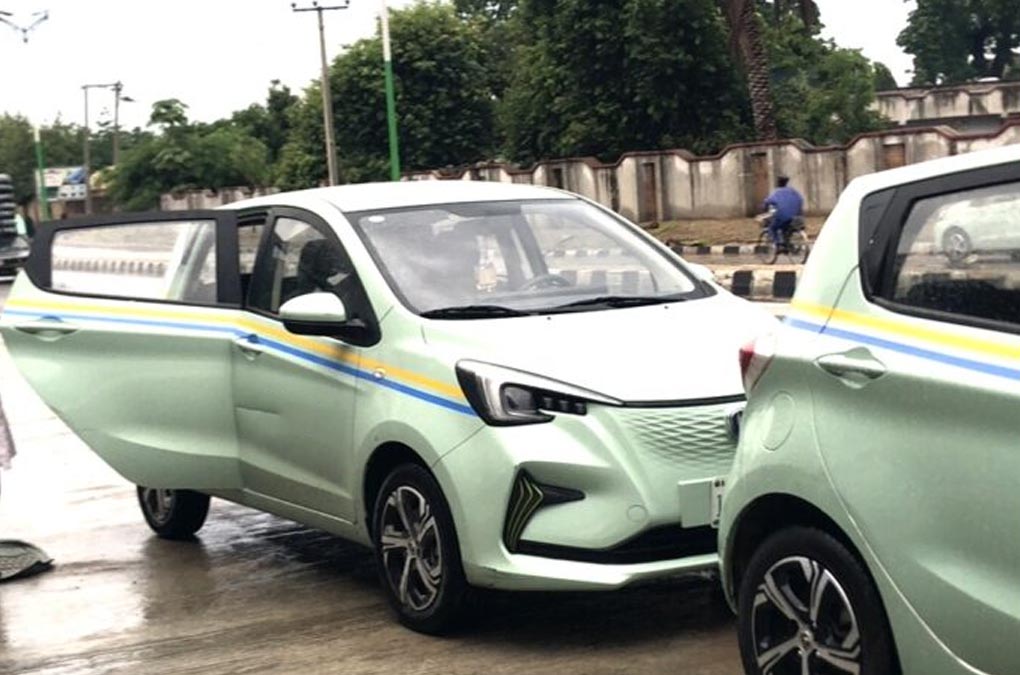
Nigeria stands at a pivotal moment. The push for cleaner energy, combined with the economic strain of petrol dependency, creates a fertile ground for electric mobility. The government’s long-term vision, which includes a pledge for 100% zero-emission sales for new cars by 2040, signals a clear directional shift. This transition promises not only cleaner air in our bustling cities but also a reduction in household transportation costs and a surge in new technology-focused industries. The growth potential is immense, with projections showing the Nigeria E-SUV market alone expanding to USD 54.32 Billion by 2033.
Table of contents
- The Promise of an EV Revolution in Nigeria
- Why Affordability is Key to Widespread Adoption
- What This Guide Will Cover: Your Roadmap to an Affordable EV by 2026
- Decoding “Cheapest” for the Nigerian Market in 2026
- Top Contenders: The Most Affordable Electric Cars for Nigeria (2026 Projections)
- The True Cost of EV Ownership in Nigeria: Beyond the Purchase Price
- Powering Your Ride: Practical Charging Solutions for the Nigerian EV Owner
- Accelerating the Revolution: The Role of Local Manufacturing and Policy Support
- Making the Switch: Essential Tips for Prospective EV Owners in Nigeria
- Conclusion
Why Affordability is Key to Widespread Adoption
For this revolution to be truly transformative, it must be accessible to the average Nigerian. While early adopters have paved the way, mass adoption will only occur when the upfront cost of electric vehicles becomes competitive with their petrol-powered counterparts. Affordability is the gateway, the single most important factor that will unlock the market for the majority and turn the EV from a niche luxury into a mainstream transportation solution. This understanding is crucial for automakers, policymakers, and consumers alike.
What This Guide Will Cover: Your Roadmap to an Affordable EV by 2026
We will decode what “cheapest” truly means in the Nigerian context, moving beyond the initial purchase price to explore the total cost of ownership. We will project the top contenders for the most affordable EVs in 2026, review their features, and estimate their local pricing. Furthermore, we will delve into the practicalities of charging, maintenance, and the evolving policy landscape that will shape your EV ownership experience. Consider this your essential resource for making an informed decision.
Decoding “Cheapest” for the Nigerian Market in 2026
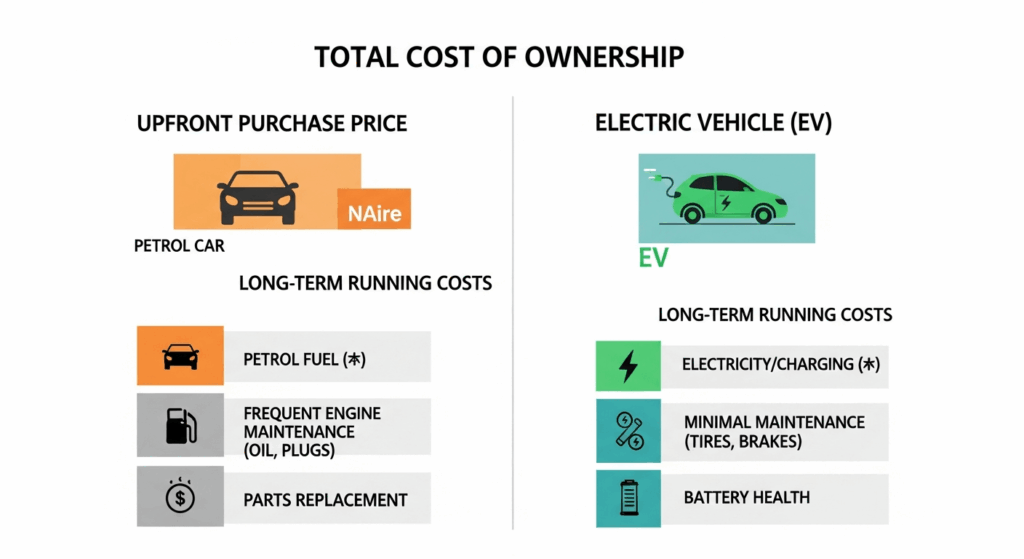
The word “cheapest” can be misleading when it comes to electric vehicles. A comprehensive understanding requires looking past the showroom price tag and evaluating the total cost of ownership, which is where EVs often reveal their true economic advantage.
Beyond the Sticker Price: Factors Influencing Local EV Costs
Several factors determine the final cost of an EV in Nigeria. Import duties and tariffs, while potentially subject to future incentives, currently add a significant margin. The cost of local assembly, battery sourcing, and fluctuating exchange rates also play a crucial role. Furthermore, the initial setup for home charging must be factored into the equation, though this is a one-time investment that pays dividends through lower running costs.
Setting Realistic Price Expectations for 2026
While EVs are becoming more affordable globally, it’s essential to set realistic expectations. Currently, new EVs in Nigeria range between ₦12 million and ₦28 million, a significant premium over new petrol cars. However, with the advent of local assembly and increased competition from manufacturers in China, we project that by 2026, the entry point for a new, reliable EV could drop significantly, making them a much more viable option for a wider audience.
Top Contenders: The Most Affordable Electric Cars for Nigeria (2026 Projections)
The race to produce the most affordable and practical EV for emerging markets is heating up. By 2026, Nigerian buyers can expect a mix of locally assembled vehicles and value-driven imports, primarily from China, to dominate the budget segment.
Locally Assembled and Manufactured EVs: A Game Changer for Affordability
The most significant driver of affordability will be local production. Companies like Stallion Group (with the Hyundai Kona EV) and Jet Motor Company are pioneering this space. Local assembly reduces hefty import duties and shipping costs, creating jobs and tailoring vehicles to Nigerian road conditions. As government policy increasingly favours local production, expect to see more indigenous brands and joint ventures offering purpose-built, cost-effective electric vehicles by 2026.
Promising Imported Models with Strong Value Proposition
Imports, particularly from China, will remain a popular source of affordable EVs. Brands like BYD, Changan, and Wuling have mastered the art of producing feature-rich, low-cost electric cars. Models like the Changan Benni EV, which is already available and priced at approximately ₦20 million (~$12,195), provide a glimpse into the future. By 2026, newer iterations of these models and their competitors are expected to offer better range and technology at even more competitive prices.
Estimated Price Ranges for 2026 (Local Currency Focus)
Based on current trends and the anticipated impact of local assembly policies, we project the following price brackets for new entry-level EVs in Nigeria by 2026:
- Locally Assembled Compact EVs: ₦10 million – ₦15 million
- Imported Chinese Compact EVs: ₦12 million – ₦17 million
- Used Imported EVs (3-4 years old): ₦6 million – ₦10 million
These projections represent a significant step towards price parity with traditional petrol vehicles, making the EV proposition more compelling than ever.
The True Cost of EV Ownership in Nigeria: Beyond the Purchase Price
A smart car purchase involves looking at the total cost of ownership. For EVs, the initial investment is often higher, but the long-term savings on fuel and maintenance can be substantial.
Understanding Financing Options for Your 2026 EV
As EVs become more mainstream, financial institutions in Nigeria are expected to introduce dedicated financing products. These may include green loans with preferential interest rates. Prospective buyers should anticipate needing a significant down payment but can look forward to more structured and supportive financing solutions from both commercial banks and specialised asset financing companies by 2026.
Running Costs: Fuel Savings vs. Electricity Expenses
This is where electric vehicles truly shine. With the volatile price of petrol, charging an EV at home offers predictable and significantly lower running costs. A full charge, providing 200-300 km of range, can cost a fraction of what it would take to cover the same distance in a petrol-powered car. This daily saving accumulates rapidly, offsetting the higher initial purchase price over the vehicle’s lifespan.
Battery Health and Longevity: What You Should Know
The battery is the heart of an EV and a key consideration. Most modern EV batteries are designed to last for at least 8-10 years, or over 160,000 kilometres, while retaining a majority of their original capacity. By 2026, battery technology will be even more robust. Buyers should always check the manufacturer’s battery warranty, which is the best guarantee of its longevity and performance.
Maintenance and Servicing: Planning for the Long Run
EVs have far fewer moving parts than internal combustion engine (ICE) vehicles. There are no oil changes, spark plugs, or exhaust systems to maintain. This translates to drastically lower routine maintenance costs. Servicing typically involves checks on the battery, electric motor, brakes, and tires. The primary long-term cost to plan for would be an eventual battery replacement, though this is unlikely to be needed within the first decade of ownership for a new 2026 model.
Powering Your Ride: Practical Charging Solutions for the Nigerian EV Owner
The question of “where to charge?” is a major concern for prospective EV owners. The developing EV ecosystem in Nigeria offers several practical solutions to ensure your vehicle is always ready to go.
Home Charging Solutions: Reliability and Affordability
For the vast majority of EV owners, over 90% of charging will happen at home overnight. A standard home charging unit (AC Level 2 charger) can be installed by a qualified electrician and can fully charge most EVs in 6-8 hours. This is the most convenient and cost-effective method, leveraging residential electricity tariffs and ensuring you start every day with a full “tank.”
The Expanding Public Charging Network
While the public charging network is still nascent, it is growing. Companies are actively investing in building out infrastructure. For instance, NEV Electric plans to install 300 charging stations in Lagos and Abuja in the near term. However, the market has faced challenges, reflected in a negative CAGR of -20.16% from 2020 to 2024, indicating a period of restructuring and strategic shifts. By 2026, this network will be more mature, particularly along major highways and in urban centres.
Innovative “Solutions” for Bridging the Infrastructure Gap
To address current gaps, innovative solutions are emerging. These include mobile charging services, battery swapping stations for specific vehicle models, and charging hubs integrated into shopping malls, offices, and hotels. These creative approaches will supplement the traditional network of charging stations, making EV ownership more practical even before widespread public infrastructure is available everywhere.
Accelerating the Revolution: The Role of Local Manufacturing and Policy Support
For Nigeria’s EV revolution to gain unstoppable momentum, a supportive framework of local production and government policy is essential. These elements work together to drive down costs, build consumer confidence, and ensure the long-term sustainability of the EV ecosystem.
Boosting “Local Manufacturing” for Greater Affordability and Accessibility
Local manufacturing is the linchpin of affordability. By assembling vehicles within Nigeria, companies can bypass steep import tariffs, create skilled jobs, and adapt designs for local conditions. This not only makes the final product cheaper but also fosters a domestic supply chain for parts and servicing, strengthening the entire EV ecosystem from the ground up.
Government Initiatives and “Policy Incentives”
Supportive government policy is critical. The recent Electric Vehicle Transition and Green Mobility Bill, which mandates local assembly and sourcing, is a landmark piece of legislation. Further incentives, such as tax breaks for EV purchasers, reduced registration fees, and investment credits for charging infrastructure developers, will be crucial catalysts for accelerating market growth and encouraging widespread adoption. A proactive government program will define the pace of our transition.
Connecting EV Adoption to National Development Goals
The shift to electric vehicles aligns perfectly with Nigeria’s broader development goals. It supports the nation’s climate commitments, reduces reliance on imported fossil fuels, improves public health through better air quality, and positions Nigeria as a leader in Africa’s green technology sector. This transition is not just about cars; it’s about building a more sustainable and prosperous future.
Making the Switch: Essential Tips for Prospective EV Owners in Nigeria
Are you ready to be part of the revolution? Transitioning to an electric vehicle is an exciting prospect. Here are some essential tips to ensure your switch is smooth and successful.
What to “Understand” Before You Buy: Research and Test Drives
Before committing, deep-dive into research. Read every review and watch videos about the models you’re considering. Gaining a clear understanding of real-world range, charging speeds, and features is vital. Whenever possible, take a test drive. Experiencing the silent, instant torque of an EV is often the final push needed to convince prospective buyers.
Assessing Your Daily Driving Needs and Charging Habits
Evaluate your typical daily commute and driving habits. Do you primarily drive within the city, or do you take long-distance trips? An EV with a 250km range is more than sufficient for most urban dwellers. Assess your home situation: can you easily install a home charger? Matching a vehicle’s capabilities to your lifestyle is key to a positive ownership experience.
Navigating Insurance and Registration for Electric Vehicles
Contact your insurance provider to understand their policies for electric vehicles. While the process is similar to that for petrol cars, some insurers may offer specialised packages or have different premium calculations based on the vehicle’s value and repair costs. Registration should be straightforward, though by 2026, we may see dedicated “green” license plates or reduced fees as part of government incentive programs.
Finding Reliable “Technicians” for EV Servicing
The demand for skilled EV technicians is growing. Before you buy, identify service centers or independent mechanics in your area who are certified to work on electric vehicles. Dealerships for locally sold EVs will be the most reliable source for maintenance and repairs. As the market grows, the network of qualified technicians will expand, ensuring long-term support for your vehicle.
Conclusion
The road to 2026 promises a paradigm shift for transportation in Nigeria. The convergence of global technological advancement, supportive local policy, and a clear market need is setting the stage for an affordable electric vehicle revolution. The question is no longer if EVs will become mainstream, but how quickly. For the prospective buyer, this means that owning a quiet, efficient, and cost-effective electric car is moving from a distant aspiration to a tangible reality.
The models we’ve projected, from locally assembled game-changers to value-packed imports from China, represent the first wave of accessible electric mobility. By understanding the true cost of ownership, factoring in massive fuel savings and minimal maintenance, the financial case for switching becomes undeniably strong. While challenges in the charging infrastructure remain, rapid investment and innovative solutions are paving the way for a more connected and reliable EV ecosystem.
Your next step is to begin your research. Use this guide as a starting point to assess your driving needs, explore emerging financing options, and stay informed on new model releases. By preparing now, you can be among the first to confidently embrace the future of driving in Nigeria, contributing to a cleaner, quieter, and more sustainable nation. The revolution is coming; it’s time to get charged up.