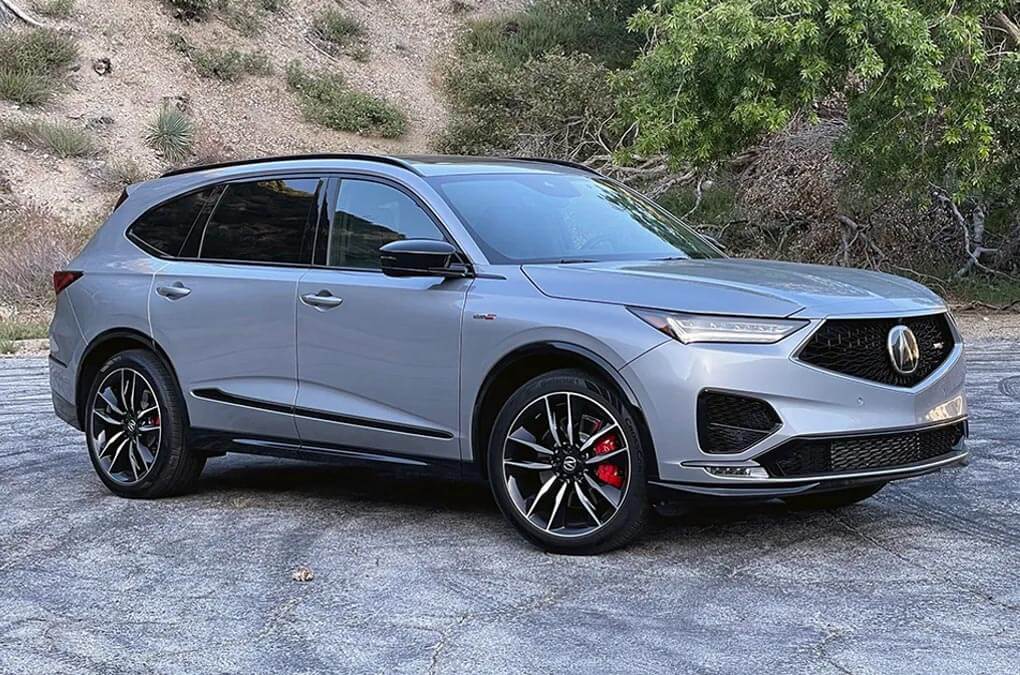

The Acura MDX. Say that name in a Nigerian mechanic’s workshop or a car dealer’s compound, and you’ll get a mixture of reverence and caution. It’s an SUV that perfectly captures the aspiration of Nigerian buyers: luxury, space, a powerful V6 engine, and a solid reputation earned from its Honda roots. It’s a popular choice among executive families, not just for the status it projects but for the value it offers compared to its European rivals.
But the journey of a foreign-used (Tokunbo) luxury SUV on Nigerian roads is never straightforward. Between the punishing asphalt, the unpredictable traffic, and the scarcity of genuine specialised parts, the MDX faces challenges that go far beyond what its North American designers ever imagined.

If you are currently eyeing that clean Acura MDX “Tokunbo” model on the market, or if you already own one and are constantly battling one issue or the other, this long-form guide is for you. We break down the real reliability concerns, identify the dreaded common faults, show you how to maintain it cost-effectively, and provide a clear picture of what you should expect to pay for a unit today.
The Unspoken Truth: Acura MDX Reliability on Nigerian Roads

Honda, the parent company of Acura, is synonymous with reliability in Nigeria. From the Honda End-of-Discussion (EOD) to the Pilot, their vehicles are renowned for their durability. The MDX inherits this DNA, making it inherently solid. However, its luxury status means it carries more complex technology and more sensitive components than a standard Honda.
Where the MDX Shines: The Engine and Frame
For the most part, the MDX’s core mechanical components are beasts.
- The J-Series V6 Engine: This engine is a masterpiece of Japanese engineering. With routine oil changes and maintenance, the 3.5L and 3.7L variants are known to easily surpass 150,000 to 200,000 miles (240,000 to 320,000 km). This is the anchor of the MDX’s reliability. It rarely gives problems outside of routine wear and tear, like spark plugs or belt replacements.
- Body Structure: The MDX is built like a tank. It offers the kind of solidity and structural integrity that makes it excellent for long-distance travel on Nigerian highways. Rust is typically not a major issue here, which keeps the body lasting forever.
Where the MDX Falters: The Achilles’ Heel
The reputation of the Acura MDX is often marred by a few specific, and often expensive, faults that are amplified by our environment and maintenance culture.
The Transmission Nightmare
This is the single most searched-for problem associated with the MDX in Nigeria. While Acura has made improvements over the years, certain models are notorious.
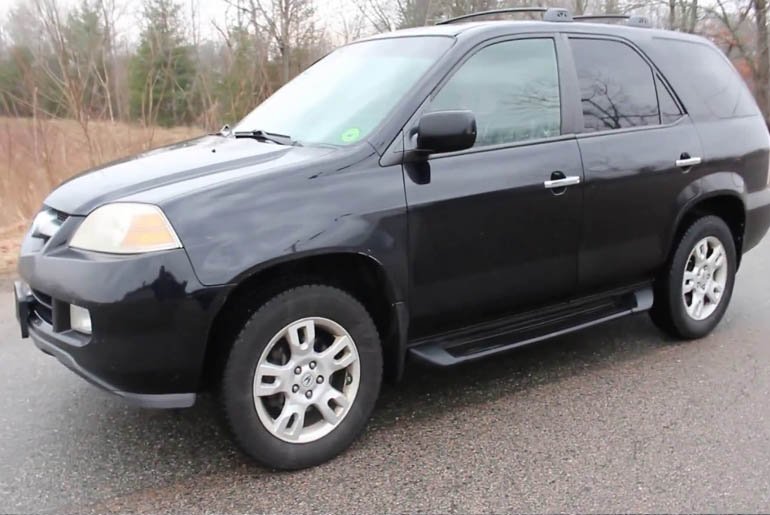
- The First Generation (2001-2006): These models are legends, but their 5-speed automatic transmissions are famously weak. Overheating, rough shifting, and eventual failure were common. For Nigerian buyers, this generation should be approached with extreme caution.
- The Second Generation (2007-2013): The transmission here is generally better. However, the 2007 and 2010 models still reported transmission issues. The key to maintaining this transmission is scrupulous fluid changes. Nigerian driving conditions (heat, heavy traffic, dust) degrade transmission fluid much faster than in cooler climates.
- The Third Generation (2014-2020): The 2014 model, with its initial teething problems, and the later models (2016-2018) that utilised the ZF 9-speed automatic transmission have been flagged by experts. The ZF 9-speed can be jerky at low speeds, and while software updates fixed many issues, it remains a headache for local mechanics unfamiliar with its complexity.
Local Mechanic Insight: “Many MDX owners wait until the transmission is already showing symptoms, slipping, clunking, or jerking before bringing it in. By then, it’s too late. Your transmission fluid should be changed every 30,000 miles (about 48,000 km) religiously, even if the manual says longer, because of our traffic.”
Common Faults and Localised Maintenance
Beyond the transmission, several other issues tend to surface when the MDX is subjected to Nigeria’s peculiar road network and climate.
Suspension and Steering Rack Problems
Nigerian roads are notorious for destroying suspension components. The MDX, while robust, is not immune.
- Sway Bar Links and Bushings: These wear out quickly, leading to the familiar kpu-kpu-kpu sound when driving over rough terrain. They are relatively inexpensive to fix, but the replacements often need to be of high quality to last.
- Power Steering Pump (Older Models): The steering pump can develop leaks. You’ll notice difficulty turning the wheel or a whining noise, especially when the vehicle is cold. A replacement pump can be pricey, but rebuilding is a common, cost-effective local solution.
- Shock Absorbers: The MDX’s shock absorbers, especially the electronically controlled ones in higher trims, are not cheap. Owners often switch to more rugged, non-electronic aftermarket shocks when the originals fail, a sacrifice of luxury ride for durability.
Electrical and Infotainment Glitches
The more modern the MDX, the more tech it carries, and the more potential points of failure there are for a Nigerian owner.
- Infotainment System Freezing: Especially in the 2014-2017 models, the dual-screen system can freeze or lag. Local electricians are increasingly adept at diagnosing and replacing faulty modules, but finding original replacements can be challenging.
- Battery Drain: Faulty or neglected wiring after local modifications (like alarm installations) or simply aged sensors can lead to an unexplained battery drain. Always ensure your electrician is experienced with luxury Asian imports.
Cost-Effective Maintenance Strategy in Nigeria
Owning an Acura MDX demands a proactive, rather than reactive, maintenance approach. This is the only way to avoid that devastating, five-to-seven-figure repair bill.
1. The Power of Prevention (Fluid Management)
This cannot be overstressed. For an MDX in Nigeria, fluids are life.
- Transmission Fluid: Use only the recommended Acura DW-1 fluid or a high-quality equivalent. Change it every 30,000 km (18,000 miles), or at least once a year, even if your mileage is low. This is your best insurance against a N1.5 million+ transmission replacement.
- Engine Oil: Stick to the manufacturer’s recommended synthetic oil and change interval. The V6 engine needs clean, high-quality oil to function correctly, especially the Variable Valve Timing and Lift Electronic Control (VTEC) system.
2. Sourcing of Parts: The ‘Genuine’ Dilemma
In Nigerian auto markets like Ladipo or the Spare Parts market in Abuja, you will find parts categorised as:
| Part Category | Description | Nigerian Price Implication |
| Original Equipment (OEM) | Manufacturer-branded parts. The best quality. | Highest Cost. Best for critical components like transmission solenoids, timing belts, and water pumps. |
| Aftermarket (High Quality) | Reputable third-party brands (e.g., Honda/Acura-specialized manufacturers). | Mid-Range Cost. Great for suspension parts, brake pads, filters, and spark plugs. |
| Local/Fake | Low-cost, poorly made knock-offs. | Avoid at all costs. Using these on an MDX is a false economy and will lead to bigger repairs. |
The rule of thumb: For anything that touches the engine or transmission, buy original, even if it hurts your pocket. For body parts, filters, and brake components, a high-quality aftermarket is an acceptable compromise.
Acura MDX Price Snapshot in the Nigerian Market
The price of an Acura MDX is heavily dependent on the generation, model year, and the all-important customs duties. The current foreign exchange rate keeps prices volatile, but here is a realistic range for Tokunbo (Foreign Used) units as of late 2024.
| MDX Generation/Year | Condition | Estimated Price Range (Naira) | Key Reliability Notes |
| 1st Gen (2001-2006) | Tokunbo | ₦4,500,000 – ₦7,500,000 | High Risk. Transmission highly susceptible to failure. Buy only if meticulously maintained. |
| 2nd Gen (2007-2013) | Tokunbo | ₦8,000,000 – ₦14,000,000 | Best Value. Most robust generation. Avoid 2010 models (oil consumption). Check suspension closely. |
| 3rd Gen (2014-2015) | Tokunbo | ₦16,000,000 – ₦22,000,000 | High Risk. Transmission is highly susceptible to failure. Buy only if meticulously maintained. |
| 3rd Gen (2016-2018) | Tokunbo | ₦23,000,000 – ₦30,000,000 | ZF 9-Speed. Transmission can be jerky. High-end features like the dual-screen must be tested thoroughly. |
| 4th Gen (2021-Present) | Tokunbo | ₦45,000,000 and above | Too new for local fault data, but maintenance will require specialized tools and software. |
Note: Prices are highly speculative and vary based on customs duty, mileage, trim level (Technology, Advance, A-Spec), and seller.
The Resale Reality
One major advantage the Acura MDX has over many luxury rivals like the Mercedes-Benz ML/GLE or BMW X5 is its strong resale value. Because of its Honda heritage, it is seen as easier to fix than its German counterparts. A well-maintained MDX will always find a buyer quickly in the Nigerian market, provided the potential buyer is reassured that the transmission is solid.
Before You Buy: The Nigerian Pre-Purchase Checklist
Never, under any circumstances, buy an MDX without a proper check.
- The Transmission Test: Drive the car hard. Shift manually. Listen for clunks, jerks, or slipping between gears. If the engine revs and the car doesn’t accelerate immediately, walk away.
- The Suspension Check: Inspect the shock absorbers for oil leaks. Have a mechanic check the suspension bushings and steering rack for play. This will be the first area to show wear from Nigerian roads.
- Oil Consumption (2010 Models): Check the oil dipstick before and after a test drive. If the seller reports having to top up oil often, the piston rings may be failing, a major, expensive engine job.
- Computer Diagnosis: Use a professional scanner tool (like an HDS for Honda/Acura) to check for stored codes, even if the Check Engine Light is off. Fault codes in the transmission control module are a death sentence.
Conclusion: The Final Verdict
Is the Acura MDX a reliable luxury SUV for Nigeria? Yes, but only if you buy the right model year and commit to proper, specialised maintenance.
The MDX is a powerful, comfortable, and spacious alternative to the ubiquitous Toyota Highlander and the expensive German luxury SUVs. Its success and longevity in Nigeria rest on one crucial decision: avoiding the models with documented transmission issues and adhering to an aggressive fluid change schedule.
Suppose you opt for a well-maintained 2nd Generation (2007-2013, avoiding 2010) or a meticulously inspected 3rd Generation model. In that case, the MDX will serve you faithfully for years, offering a premium driving experience without the wallet-draining terror associated with many other luxury badges. Don’t be penny-wise and pound-foolish; invest in quality parts and a trusted mechanic, and your MDX will give you the peace of mind you deserve.